




Corporate Water Disclosure: Reporting and Assurance
Apex reviewed water reporting practices of 58 publicly listed companies that underwent independent assurance of their water data in Reporting Year (RY) 2024–2025. Our analysis shows that corporate water disclosures overwhelmingly emphasize quantity metrics and rely heavily on internal company protocols as reporting criteria.
For years, carbon has dominated ESG conversations—shaping regulations, driving investor scrutiny, and capturing headlines. But as populations grow and water scarcity intensifies, water is emerging as the next material frontier. From supply chain disruptions to reputational risk, water is no longer peripheral; it is a strategic imperative. Companies that fail to address water risks holistically risk falling behind in an evolving resource management landscape.
Investor demand for reliable, verifiable, decision-useful water data is accelerating. CDP investor signatories requesting water disclosures grew from 520 in 2019 to 746 in 2023, representing $135 trillion in combined assets. CDP reports a 100% increase in water disclosure over the same period.
Despite this surge in reporting demand, the quality and scope of corporate water disclosures remain highly uneven. Compared to climate, water still lags. In 2024, CDP scored 22,700+ companies on transparency and action. Of these, 22,400 received a climate score, while only 6,500 received a water score.
Current State of Water Disclosure
- Our analysis reveals a fragmented picture: Total Water Withdrawal and Total Water Consumption appear in over 70% of reports.
- 13.6% of companies report only one metric—Total Water Withdrawal.
- Nuanced metrics (e.g., discharge quality, water-stressed area mapping, stewardship commitments) are far less common.
- Only 5% of the companies report some metrics that monitor water quality.
Sectoral Patterns
- Industrial & Manufacturing leads with an average of 4–5 water KPIs per company.
- Food, Beverage & Agribusiness shows strong engagement, often including water-stress data and stewardship goals.
- Financial Services and Technology lag significantly, typically reporting only basic withdrawal figures.
Average Water KPI Count by Industry
| Industry | Avg KPI Count |
| Industrial & Manufacturing | 4.8 |
| Food, Beverage, & AgriBusiness | 4.2 |
| Life Sciences & Healthcare | 3.5 |
| Financial Services | 2.0 |
| Technology & Electronics | 2.3 |
(Source: Apex analysis of 58 companies across sectors)
Reporting Standards and Assurance
Science Based Targets Network (SBTN) identifies four key frameworks for water disclosure: Alliance for Water Stewardship (AWS) Standard, CDP, Net Positive Water Impact (NPWI), and the Task Force on Nature-Related Financial Disclosures (TNFD).
Of the companies Apex worked with, CDP’s Water Security Questionnaire is most widely used, followed by GRI. Few companies reference AWS; none used NPWI or TNFD as formal reporting criteria for assurance.
- Internal company protocols dominate: 44 of 58 companies use them as primary criteria; 18 rely exclusively on internal standards.
- CDP (19 companies) and GRI (9 companies) are the most common external frameworks; ICMM (2), SASB (1), and AWS (1) appear rarely.
Unlike climate, CDP does not require assurance of water data to achieve an A score; while assurance is encouraged, it remains optional. To date, investors and broader stakeholder pressure to include water-related KPIs among environmental metrics requiring assurance has been relatively limited, particularly compared to climate. This, combined with the greater methodological and data maturity of GHG accounting relative to water metrics, has contributed to lower uptake of assurance for water-related KPIs. In our analysis, all companies that sought water data assurance opted for limited assurance, reflecting current market practice and data readiness rather than a preference for higher assurance levels.
- 56 of 58 companies used ISAE 3000 (Revised); 2 used AA1000.
- ISAE 3000 provides third-party assurance for non-financial disclosures, including water footprint.
Key Gaps
- Our findings align with the 2025 Valuing Water Finance Initiative Benchmark: reporting on water quality, supply chain and contextual water reporting and target setting remains far behind reporting on quantity.
- Even among highly engaged companies only 41% set time-bound water quality targets vs. 83% for quantity.
- CDP’s 2023 Global Water Report shows 1 in 5 companies report supply chain water risks with potential financial impacts exceeding $77 billion, yet only 4% set supply chain water targets and 5% incentivize suppliers; none of the companies we assessed reported supplier-level water metrics.
- Even though water impacts and materiality are context-based, only 8 companies (13.8%) report withdrawals in high-stress regions, all in Agribusiness and Industrial sectors.
Market Signals and Imperatives
Water disclosure is shifting from a “nice-to-have” to a business-critical requirement. Beyond regulatory compliance, proactive water management delivers tangible benefits: operational efficiency, supply chain resilience, and reputational strength. While portfolio-level water risks remain under-prioritized, investment trends tell a different story; total spending on nature-based solutions (NbS) for water security has doubled over the past decade, reaching USD 49 billion across more than 880 watershed programs in 2023.
Despite market demand for better, clearer data, there is still room for clearer guidance from standard setters that standardizes terminology, boundaries, and assessment This would lower reporting friction, make comparison possible, and improve transparency.
Water remains undervalued, underreported, and under-managed, but that is changing fast. As regulations tighten and investor scrutiny deepens, water will become a defining metric of corporate sustainability and business risk management.
Apex and Water Stewardship
Water demands systems thinking. It moves through cities, industries, and ecosystems as one connected story. Apex works across that full system, understanding that water data lives in many places and only becomes powerful when brought together with intention. We deliver end to end solutions across groundwater, stormwater, wastewater, and water supply, blending hydrogeologic depth with transparent, modern sustainability reporting. Our teams turn scattered measurements into meaningful signals, applying modeling, permitting, and engineered design to challenges like wellfield development, aquifer storage, saline intrusion, watershed health, and corporate water risk.
If you’re ready to sharpen your water strategy and lead with confidence, we’re here to walk that path with you. The time to act is now, because water rarely waits.
To learn more about Apex’s water capabilities, please reach out.

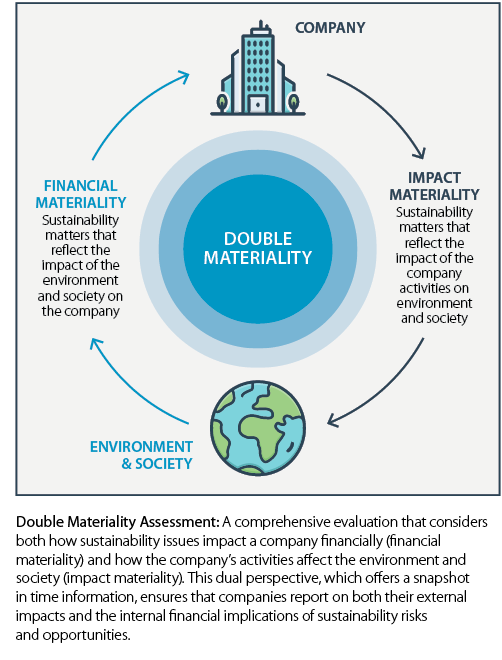

 The intention of the CSRD is to enhance the transparency of reporting. Additionally, the CSRD will generate a reduction in costs associated with sustainability and ESG reporting over the mid- to long-term as information will already be readily available. This directive may also yield a short-term benefit considering that the Securities and Exchange Commission (SEC) is in the process of proposing rule changes for