





Surveying for the Federally Endangered American Burying Beetle

The American Burying Beetle (Nicrophorus americanus) is a federally endangered species—characterized by its large size and distinctive black and orange coloring. This nocturnal beetle utilizes carrion for its life cycle, and therefore competes with vertebrates many times its size. Within the Mid-Continent region of the United States, the American Burying Beetle (ABB) is most commonly found in open fields, prairie-like grasslands, oak-pine and oak-hickory ecosystems, and along edge habitat. When an endangered species or its habitat may be impacted by a project, the US Fish and Wildlife Service (USFWS) often requires consultation under the Endangered Species Act (ESA). For projects where the ABB is concerned, presence/absence surveys are the first step of the consultation process. Apex has USFWS permitted surveyors on staff, who can perform surveys throughout the Mid-Continent region including; South Dakota, Nebraska, Kansas, Oklahoma, Texas, and Arkansas.

Apex conducts surveys using two-person teams during the ABB active season, which is from mid-May to mid-September. Two-person teams are utilized as they promote efficiency, safety, and scientific integrity. Live-traps, with an effective radius of 0.5 miles each, are monitored for three nights in good weather conditions, and must be checked by 10:00am in the morning to prevent injury to any beetles caught.

Certified ABB surveyors are a rarity, with less than 30 permit-holding individuals in the nation. Certified surveying personnel must operate under a Section 10(a)1(A) recovery permit, have extensive experience and familiarity with ABB protocols and conservation measures, and have a documented ability to identify ABB in the field.

Apex currently has one certified ABB surveyor on staff, with multiple personnel poised to become certified for the 2014 active season. The growth in Apex’s ABB program has been aided by the experience gained through extensive surveys conducted for major oil and gas clients. With such a large number of certified individuals ready and able to lead teams, Apex is capable of tackling large, interstate projects. This also provides our clients with a great amount of flexibility, as well as extensive, rapid, and accurate survey results.

Apex’s ABB and other threatened and endangered species (T&E) expertise can also be used in the early phases of project design, siting, and routing. Many T&E, wetland, and other biological issues can be identified from a desktop during the initial phases of projects—using Apex’s extensive experience. This expertise may be used to route projects around problem areas, minimizing the amount of survey and permit approval time necessary to get projects approved. Ultimately, early project input can result in cost savings and environmental permitting efficiency.

If you are in need of certified ABB surveyors, have questions on the ABB and the surveying process, or would like guidance on whether surveying is a step your project requires, feel free to contact us.

When Voluntary Cleanup Isn’t Voluntary

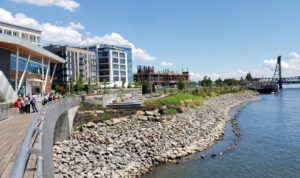
According to the U.S. Environmental Protection Agency (EPA), a “brownfield site” is a real property, the expansion, redevelopment, or reuse of which may be complicated by the presence or potential presence of a hazardous substance, pollutant, or contaminant. After EPA established its Brownfields Program in the mid-1990s to promote the redevelopment of sites that were orphaned or abandoned due to actual or perceived environmental contamination, many states adopted voluntary cleanup programs (VCP) to oversee the assessment and remediation of brownfields and to encourage redevelopment of these sites by developers that had no involvement in the former site operations that may have resulted in contamination. A chief incentive for enrolling a site into a voluntary program is the issuance of a certificate of completion, something akin to a closure letter indicating no further action is required by the state, and something most lenders require before agreeing to loan money for redevelopment of contaminated sites.

Despite the innocuous sounding name, voluntary cleanup programs are not always voluntary. Not only do lenders often require developers to enter these programs (in many cases, the voluntary cleanup program is the only regulatory program whereby a state will issue a “sign-off” on a property), but once entered, many states impose requirements very similar to other typical enforcement programs. I often describe some state programs as “voluntary enforcement programs” whereby owners volunteer to be subject to regulatory enforcement. That doesn’t sound as friendly as a voluntary cleanup program, but it more closely represents the reality in some states.

Most VCPs require an upfront enrollment fee to cover the administrative costs associated with document review, risk evaluations, etc. Though these fees—which commonly range from $2,000 to $10,000—are not insignificant, they often pale in comparison to the site assessment costs required to fully characterize environmental conditions on a property and the potential risks to all future receptor populations. For example, site characterization activities at a typical strip shopping center that has had an onsite dry cleaner operating for a few decades can exceed $100,000 and can take up to 12 or more months depending on the extent of contamination. If that characterization work indicates that there are risks to future receptors (beware of vapor intrusion or if groundwater is used as a drinking water source), then remediation costs can greatly exceed the characterization costs and take years to implement.

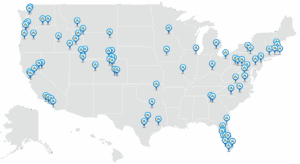
Because owners and developers depend on lenders to finance their projects, and because lenders rely on “closure” letters from state agencies to offset their perceived risks, many developers become enslaved to the VCP process and spend much more time and money satisfying regulators than they expected. Understanding the state-specific VCP requirements before embarking on a brownfield redevelopment project is critical to accurately planning and budgeting the project, and an important part of that process is teaming with an environmental consultant with a proven track record of managing sites through the VCP process. With over 35 offices throughout the US and a resume of numerous active and closed VCP projects, Apex is ideally suited to help its clients successfully navigate the challenges of “voluntary” cleanups and risk-based closures.

Capabilities Inquiry