





Nothing Ventured, Nothing Gained: Value in the Pursuit of a Scope 3 Inventory
Responding to the COVID-19 pandemic has taken front seat priority for many businesses worldwide, but climate change remains a pressing economic, environmental, and humanitarian challenge. Companies must assess their climate related risks and opportunities so that company leaders and stakeholders can begin to manage and strategize their climate response as effectively and efficiently as possible. Any such assessment starts and ends with measuring the climate impacts of a company’s operations and supply chain, known as greenhouse gas (GHG) accounting.
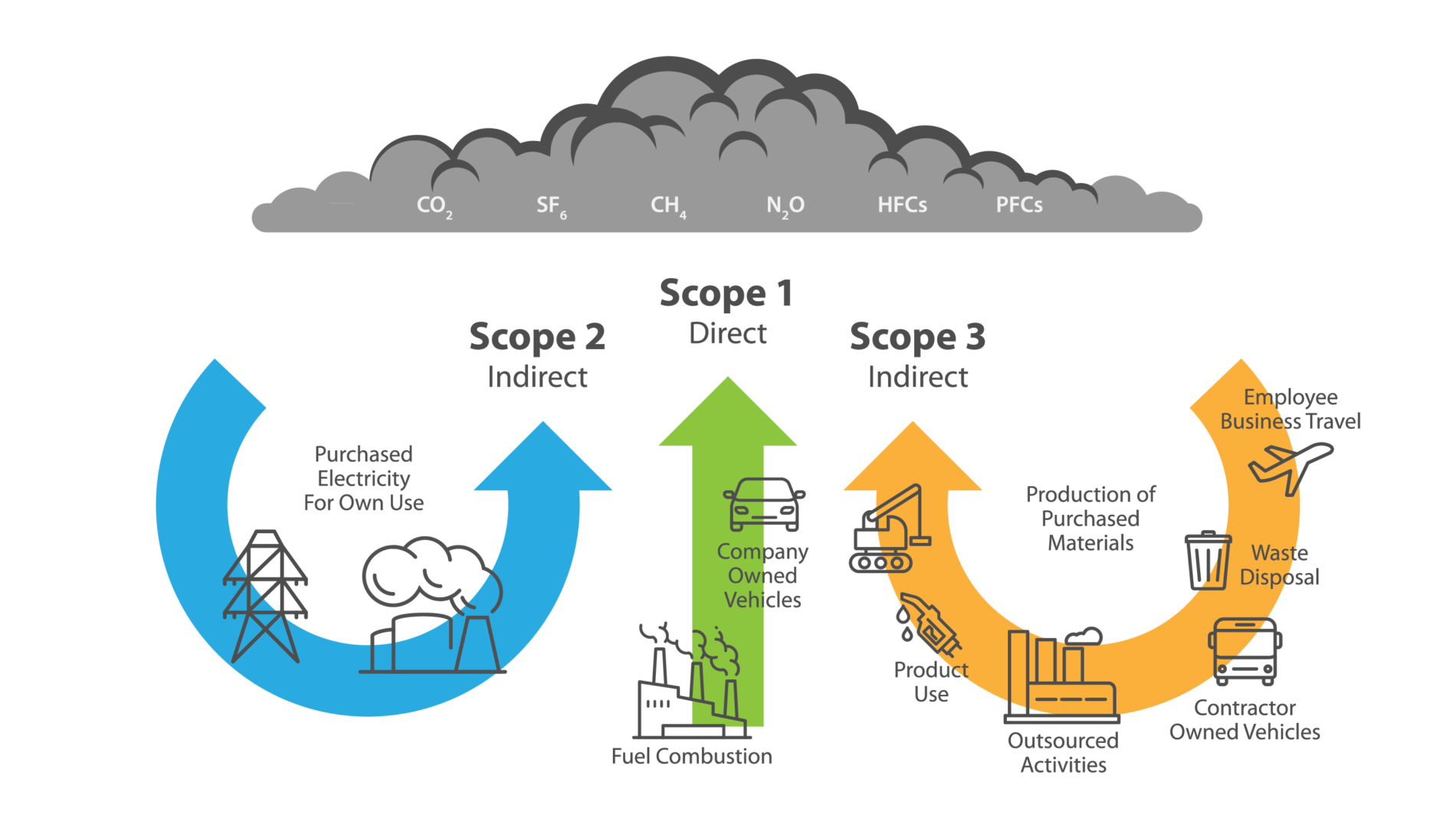
Supply chains contribute significantly to a company’s carbon footprint and, in many industries, can be four times the emissions from a companies’ own operations. Despite this, only one in three companies that reported their emissions to CDP in 2019 included supply chain (scope 3) emissions in their disclosure and one study of CDP reporting data found that only three in five companies reported engaging with their suppliers on environmental performance at all.1, 2 In light of this, many companies are largely operating with incomplete pictures of their emission hotspots. Organizations that don’t start now to seek out the data, the tools, and the understanding to grapple with their supply chain emissions expose themselves to an uncertain path through the climate challenge. The imperative for companies to act now to engage their supply chain partners, measure their emission hot spots, and leverage the value of a scope 3 inventory analysis has arrived.
Scope 3 emissions accounting, the means to a destination
Scope 3 emissions are often known as value chain emissions because it represents all indirect impacts upstream and downstream of an organization that is not already captured in scope 1 and 2 reporting. Companies measuring their scope 3 emissions face barriers not present or as extensive when measuring scope 1 and 2 emissions from their operations.
Commonly cited barriers include:
- Limited primary data is often poor quality or non-existent
- Specialized expertise is required to identify hot spots, set thresholds, and determine materiality;
- Cross-disciplinary emission source data is dispersed across organizations (such as logistics and transportation, materials management, manufacturing, energy systems, and procurement);
- Resistance from suppliers in providing data due to limited data availability in their own operations or concerns about confidentiality.
It’s important for sustainability teams that are just starting out to remember that, though these barriers are not insubstantial, tools and resources exist to make their journey to full GHG accounting a success. Companies should view the scope 3 inventory process as a flexible, iterative process driven by a company’s sustainability team. The most important aspect of pursuing scope 3 accounting is its ability to educate a company about its operations, supply chain, investors, employees, supplier partners, and its place in the global climate change solution puzzle.
“Companies may find most value in implementing the standard using a phased approach, with a focus on improving the quality of the GHG inventory over time.”
GHGP S3 Standard (sec 1.2)
The Benefits of Building a Better Data Ecosystem
The scope 3 accounting journey can benefit your company in a few ways:
1. Enrich a Culture of Collaboration & Enhance Employee Performance in the Process
In practice: Because supply chain emission source data is often spread throughout an organization it will be necessary to identify the data holder(s) and form a cohesive dataset.3 Your strongest allies in improving the quality of your inventory over time will be found through inter-departmental efforts within your organization by working with colleagues in areas such as finance, operations, human resources, and procurement.
 Furthermore, research shows that employees’ job satisfaction and sense of purpose are interconnected. The stronger an employee’s perception of impact on their clients, community, and coworkers, the greater the employee’s motivation to act in a way that benefits others. It’s literally a virtuous cycle that reaps dividends for business performance but it can often be difficult for companies to relay the story of its good works to its employees.
Rather than a barrier or a burden, your sustainability team should view this process as an opportunity to integrate and engage parts of their organization that may not have participated in your sustainability programs before. By engaging the collective intelligence of your organization, your sustainability team can provide more relevant insights into organizational impacts and opportunities.
Through collaborative supply chain emissions data gathering and assessment, your sustainability team is creating an opportunity to improve employee retention, motivation, and productivity. The process of discovery unleashed by this is ultimately an opportunity to elevate the experiences of employees – improving their opinion of your collective impact and their value within the organization. For example, an organization that measures emissions from employee commuting can use the data gathered to inform a competition-based employee program seeking to reduce emissions by biking or taking public transportation, instead of a single-occupant private car. Effective scope 3 data gathering and emissions management produce many opportunities for participatory engagement with employees.
Result: Scope 3 accounting is a broad reaching process of connecting intra-organizational barriers to unleash inter-departmental synergies and relationships. The expanded view of an inventory that includes supply chain emissions, when leveraged effectively, is the foundation of better environment, social and governance (ESG) storytelling that is ultimately better for business, employees and host communities.
2. Identifying the Data Gaps
 In practice: The scope 3 inventory process requires that you identify supply chain emissions hot spots as well as data blind spots. Identifying these blind spots will be increasingly important post-pandemic. A poll of supply chain managers conducted by MIT’s Center for Transportation & Logistics indicated that 67% of these managers foresee higher investment in supply chain sustainability post-pandemic.4 As demand for supply chain transparency grows to match investment, opaque supply chains that are vulnerable to disruption will increasingly come under pressure.
The scope 3 inventory process provides your organization with the tools needed to identify the links in your supply chain that are vulnerable to disruption. Conducted each year, it benchmarks the progress made by the organization, an important aspect for employees and investors, as well as continues to shed light on any new vulnerabilities that might arise.
Result: The scope 3 inventory assessment will reap dividends through improved relationships with suppliers, stakeholders, and employees.
The Time Is Now
Companies are increasingly coming under pressure for stakeholders to be more transparent and sustainable in their supply chain management. Evidence is mounting that COVID-19 is changing consumer behavior with one-quarter of consumers indicating they plan to patronize brands they can trust, and another quarter are willing to pay more for ethical brands during the recovery from the pandemic.5 These findings suggest that the actions companies take now, and in the future, will influence customer loyalty and growth as the pandemic reshapes consumer spending.
While the scope 3 inventory does not automatically lead to increased customer loyalty, it is an essential step an organization should take to improve internal trust and communication, provide stakeholders and consumers with supply chain transparency, and identify and resolve any supply chain opportunities or vulnerabilities faced by the organization.
Regardless of where you are at on your sustainability journey, its never too early or too late to consider including scope 3 measurement and benchmarking into your inventory program. In fact, now is perfect timing to get started for next year’s CDP or GRI reporting or to evaluate and set science-based targets. In our next related blog, we will further explore the challenges faced in developing a scope 3 inventory and pointers from the Apex Sustainability Team on overcoming those obstacles. For additional information about our sustainability services, please contact us at info@apexcos.com.
- A non-profit organization that operates a widely used global environmental disclosure system
- Dahlmann, Frederik, and Jens K. Roehrich, “Sustainable supply chain management and partner engagement to manage climate change information,” Journal of Business Strategy and the Environment, December 2019, Volume 28, Number 8, pp. 1632–1647
- For instance, the GHG Protocol’s Corporate Value Chain (Scope 3) Accounting and Reporting Standard breaks the areas a scope 3 emissions inventory can touch in 15 categories, 8 upstream and 7 downstream on the supply chain.
- MIT CTL’s Crossroads: Understanding Uncertain Futures virtual conference poll.
- Rogers, K. & Vakil, B. Coronavirus Is Proving We Need More Resilient Supply Chains. Harvard Business Review. 2020.