




Soil and Stream Remedial Investigation and HHRA at Former Sugar Mill

Environmental Project

Soil and Stream Remedial Investigation and HHRA at Former Sugar Mill

Confidential Developer Aiea, Oahu, HI

Solution Overview

Client:

Confidential developer

Business Challenge:

  • Assessment and remediation of a site with challenging physical characteristics

Solution:

  • Targeted approach to identify areas of concern and rule out exposure pathways in unlikely areas

Results:

  • A cost-effective approach that saved the client time and significant remedial effort, resulting in major cost savings

Challenge

Based on the site’s historical use as a sugar mill, to comply with current regulatory requirements, the site required a remedial investigation, a human health risk assessment (HHRA), and a remedial alternatives analysis. The site’s physical components also presented a challenge for both assessment and remediation activities.

Solution

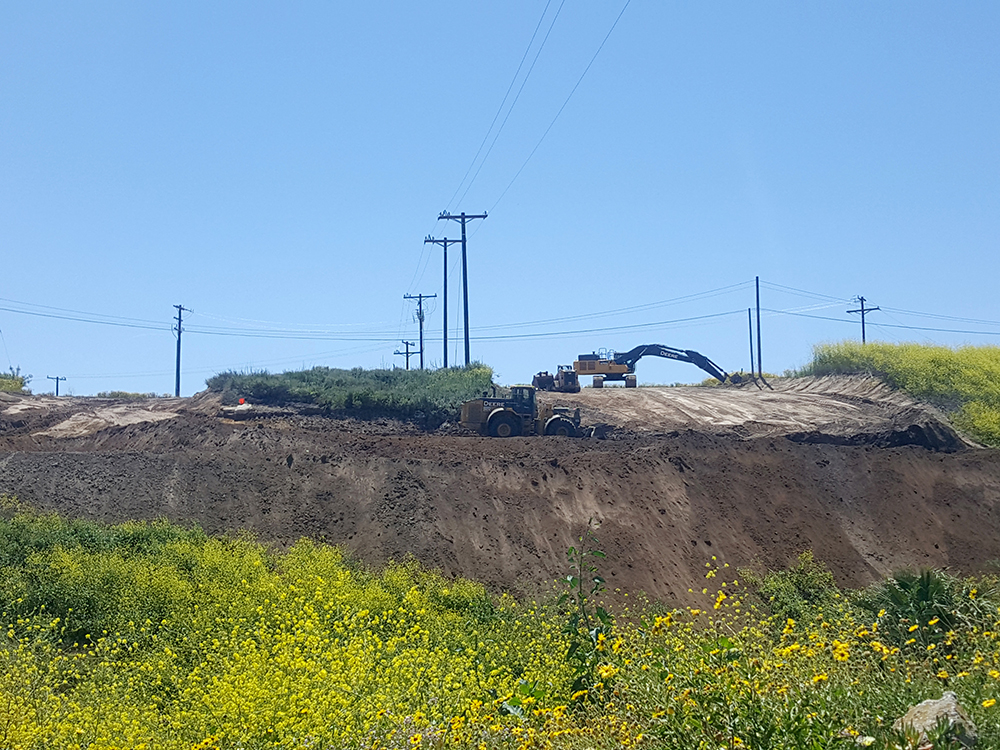
Our risk assessment included a remedial investigation of the property to be acquired and delineation of constituents of concern (pesticides, herbicides, arsenic, and lead). Impacted soil was found along the stream banks and streambed.

Using the data collected during the remedial investigation, a HHRA was prepared for current and potential future exposure scenarios. Because the site was impacted with lead, blood lead modeling was performed using the US Environmental Protections Agency (EPA) Integrated Exposure Uptake Biokinetic (IEUBK) Model for lead in children and the Adult Lead Methodology (ALM).

Complex health risks and remedial issues were encountered at this site for several reasons:

  • An ephemeral stream transected the site
  • The stream bank slopes were very steep
  • Access to the site was physically limited

Results

Apex Companies developed select remedial actions for the site that provide for reliable, cost-effective, and long-term solutions. By integrating the findings of the human health risk assessment, a remedial approach was selected that met acceptable risk levels and minimized the volume of soil requiring removal/treatment.

The site, essentially a streambed gulch, was highly unlikely to be developed in the future because of the severe stream bank slopes, presence of an ephemeral stream, and limited site access. However, lead concentrations exceeded residential and commercial action levels.

Our team was able to demonstrate through the preparation of a HHRA that lead concentrations on the vast majority of the site were health protective. Because of the unlikelihood that the site would be developed, potential exposures would be to the most probable receptors, in this case child trespassers. As a result, remedial alternatives could be developed for a much smaller area of the site while meeting health protection goals.
How Can We Help You Succeed?

Environmental and Natural Resource Site Development Support

Environmental Project

Environmental and Natural Resource Site Development Support

Confidential Commercial Real Estate Developer Mechanicsville, VA

Solution Overview

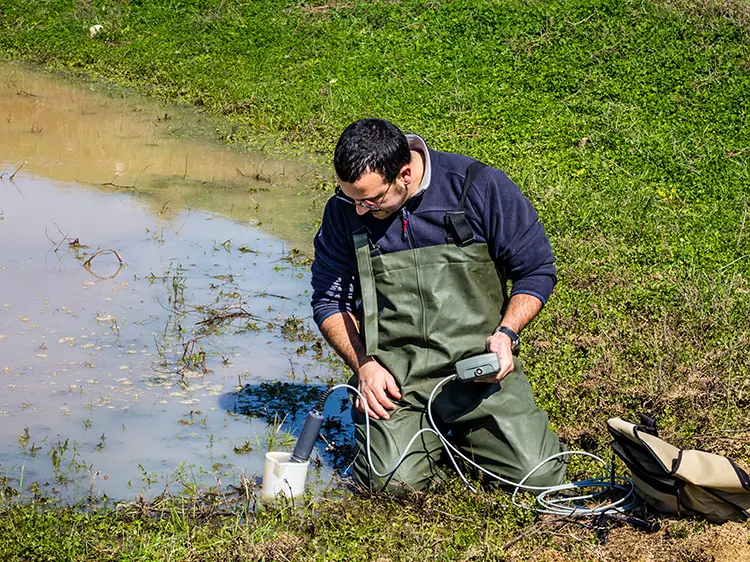
Scientist collecting water samples as part of a natural resource evaluation to determine eligibility for site development

Client:

Confidential commercial real estate developer

Business Challenge:

  • Redevelopment of a site with on-site wetlands and sensitive environmental receptors

Solution:

  • Customized natural resource evaluation, mitigation, and permitting services

Results:

  • Completion of the project with minimal impacts and in half the time estimated, saving the client time and money

Challenge

The client’s plan included redevelopment of the site as a discount grocery store. Given the site location and natural setting, this developer needed a firm with expertise in natural resource evaluation, mitigation, and permitting, who also maintained an excellent relationship with regulatory agencies.

Solution

Apex Companies provided customized natural resource evaluation, mitigation, and permitting services at a 50-acre commercial parcel in Mechanicsville, Virginia.

Our services included:

  • Field delineation of on-site wetlands
  • Mitigation site review and feasibility study
  • Functional assessment/Chesapeake Bay Preservation Act assessment
  • Perennial stream determination
  • Nutrient offset evaluation and support
  • Threatened and endangered species evaluation
  • Historic resources evaluation
  • Alternatives analysis
  • 401/404 Permitting with Virginia and the US Army Corps of Engineers (USACE)
  • Agency coordination for natural and water resource components of the project

Apex performed a delineation of Waters of the United States (WOTUS) and a Resource Protection Area (RPA) determination/perennial stream determination for the property which determined the limits and extents of jurisdictional boundaries, limits of RPA buffers, and better defined the connectivity of WOTUS on the property, thus reducing or eliminating the impediments that were faced when a competitor evaluated the property.

Results

Apex worked with the client and client’s engineer to reduce impacts from one acre to less than 0.1-acre of impact to WOTUS and reduce the permit project area to less than 0.2-acre based on intended development of the commercial parcel. The reduction in impact and project area reduced the scope of the agency’s reviews, eliminated the need for compensatory mitigation, and ultimately reduced the permitting timeline and follow‑on requirements by at least six months. The permit was obtained in less than 45 days.

Apex was able to reduce the natural resource evaluation and permitting timeline to less than six months, when a previous competitor was on a one- to two-year timeline. The reduction in timeline, impacts, and avoidance of RPA buffers provided our client with a significant reduction in fees and back-end costs, providing a significantly shorter permitting timeline which allowed our client to focus on other critical path issues. Apex was able to save the client time and money, making the project more successful than the client had ever expected.

How Can We Help You Succeed?

Environmental Compliance and Wetland Delineation

Environmental Project

Environmental Compliance and Wetland Delineation

Confidential Electric Utility Provider Midwest United States

Solution Overview

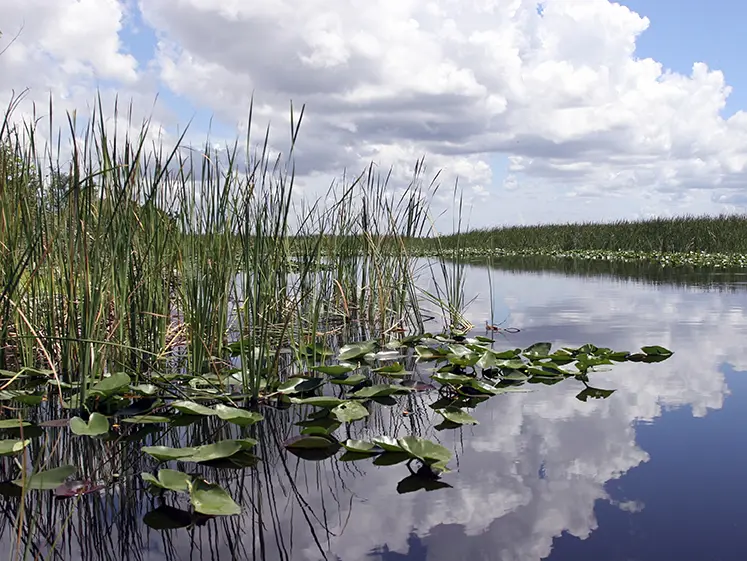
Restored wetlands adjacent to transmission lines where Apex Companies provided environmental compliance services

Client:

Confidential electric utility provider

Business Challenge:

  • Complex permitting and design considerations for linear construction project

Solution:

  • Turnkey solution for natural resources and stormwater compliance support

Results:

  • Provided client with continuous support throughout all stages, helping to facilitate project completion without compliance issues

Challenge

The client’s 138 kV transmission line project required complex permitting due to adjacent wetland areas, necessitating a partner capable of assisting with wetland, stormwater, and environmental compliance requirements.

Solution

Apex Companies provided environmental compliance services to this utility company—one of the largest electric power providers in the US with over 40K miles of transmission lines—on the project, located in the Midwest.

Our services to this utility company included working closely with the organization and its project stakeholders to complete wetland delineation and surveys. Apex inspected gravel pad removal and restoration at site structures and confirmed the proposed access route configuration along the wetland buffer zone, as well as wetland delineation and survey at the station laydown area. Apex assisted with delineation and inspected construction access ensuring all erosion and sediment control measures were followed. This included seeding and strawing dirt stockpiles and initiating access work in the project site’s vicinity. Our team also designed and monitored the best management practices (BMPs) including timber mats, fencing, and filter sock functioning to ensure the site’s compliance.

Apex made the following recommendations:

  • Moving dirt spoils north from their present location in order to avoid conflict with construction and prevent encroachment on a potential wetland area to the west of the access path.
  • Relocating dirt spoils north, near structures and access points and installing fence and filter socks.
  • Seeding and strawing all dirt spoil areas adjacent to access routes as soon as feasible.
  • Restoring adjacent wetland areas to pre-construction conditions after removal of BMP.

Because the project was completed linearly, the construction stages varied. Apex provided guidance during the different stages through the life cycle of the project construction.

Results

Apex has years of experience providing environmental review of pre-selected substation locations for this company’s utility projects. Apex provides feedback and suggestions for alternate routes and layouts to adjust the project plan to simplify the regulatory approval process. We have provided a range of environmental services including managing, maintaining, and installing electric transmission lines and substations across the country. This includes wetland delineation, cultural resources desktop analyses, and threatened and endangered species habitat assessments involving stormwater pollution prevention plan (SWPPP) development.

How Can We Help You Succeed?

Convenience Store Investigation and Remediation

Environmental Project

Convenience Store Investigation and Remediation

Confidential Regional Gas Station and Convenience Store Chain Gloucester, VA

Solution Overview

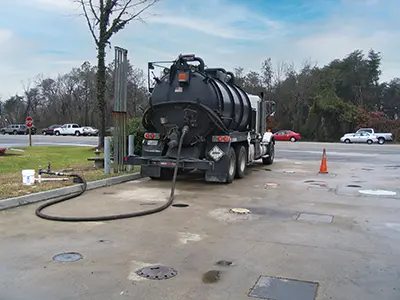
Vacuum truck performing an Aggressive Fluid Vapor Recovery (AFVR) as part of the underground storage tank remediation process

Client:

Confidential regional gas station and convenience store chain

Business Challenge:

  • Significant off-site impacts from a leaking underground storage tank (UST)
  • Remediate both on-site impacts and prevent further impacts to sensitive off‑site receptors

Solution:

  • Coordinate closely with regulators and adjacent property owners to gain access for remediation activities

Results:

  • Streamlined remediation and closure activities
  • No further action required at the site
  • Restoration of site and off-site properties to complete satisfaction of Virginia Department of Environmental Quality (VA DEQ)

Challenge

When a release of gasoline from an UST system at a retail gasoline station occurred, the client needed to both investigate and remediate the impacts to on-site soil and groundwater.

The project’s scope initially involved a site inspection, gauging and screening of tank‑basin observation wells, and screening storm drain inlets. Following the initial site inspection, investigation of the source included an internal inspection that determined the release was from an internal failure of the UST.

Solution

Through coordination with the VA DEQ’s case manager, Apex Companies performed a subsurface investigation and site characterization. This included nine soil borings, six of which were completed as groundwater monitoring wells. Dissolved-phase gasoline compounds were detected in each of the monitoring wells, and free-phase gasoline was detected in five of the six monitoring wells. Two supply wells used for drinking water purposes identified through the receptor survey—one upgradient and one downgradient—were sampled and did not yield any gasoline compounds at or above laboratory detection limits; however, based on plume migration modeling, it was determined that downgradient supply wells could be at risk should the plume migration not be mitigated. Apex recommended additional investigation to further delineate the plume and the development of a corrective action plan (CAP) to address free-phase and dissolved‑phase gasoline at the site.

A total of four Site Characterization Report Addendums (SCRA) were submitted to DEQ and included details concerning the installation of 18 additional monitoring wells (on- and off-site), recovery well installations, free product recovery, a remediation technology assessment, quarterly groundwater sampling, soil vapor sampling, hydrogeologic testing, risk assessment, and alternate water supply for an impacted residence. The soil gas data indicated that vapor-phase gasoline intrusion into an off-site building was a risk.

Prior to CAP implementation and as an interim measure, Apex completed 18 free product recovery events at the site using manual bailing and aggressive fluid/vapor recovery that recovered up to an estimated 4K gallons of gasoline from the subsurface. Apex developed the CAP and as part of CAP implementation, installed a subgrade recovery network using conventional and trenchless technologies on an adjacent property to remediate the free- and dissolved-phase plume and reduce risk to receptors. Our staff completed nine quarterly CAP implementation subphases that included free product recovery using one of Apex’s mobile dual-phase extraction (DPE) systems and groundwater monitoring and sampling. Apex calculated that a total of approximately 8K‑gallons of gasoline was recovered as vapor phase via aggressive fluid vapor recovery (AFVR) and DPE methods. Field and laboratory analytical data confirmed that the remediation system was very effective in the removal of gasoline at the site and adjacent properties. Following four quarters of post-CAP implementation monitoring and the absence of free product, the pollution complaint was closed by the DEQ.

Following achievement of case closure from the DEQ, Apex performed proper abandonment of the monitoring wells, recovery wells and vapor wells. Apex also decommissioned the remediation system components, and all site closure work was completed in accordance with DEQ guidelines.

Results

The primary challenge faced was the fact there was significant off-site impact (free- and dissolved-phase plume) and sensitive at-risk receptors including an adjacent bank building (vapor intrusion potential) and potable water supply wells. Additionally, the adjacent bank building including the parking lot and landscaped areas were new, therefore their ownership was more sensitive to any investigation and remediation that occurred on the property. Through communication with adjacent downgradient and impacted property owners, Apex was able to obtain necessary access agreements with property owners to investigate and remediate the petroleum release. Apex also has a strong working relationship with the DEQ through our state lead contract, which often assists in getting appropriate and timely approvals for necessary activities.

How Can We Help You Succeed?

Soil Remediation at Former Metals Smelting Site

Environmental Project

Soil Remediation at Former Metals Smelting Site

Confidential International Mining Company Jacksonville, FL

Solution Overview

Soil remediation project site where in-situ treatment is being performed to neutralize acidic soil and groundwater.

Client:

Confidential International Mining Company

Business Challenge:

  • Soil and groundwater contaminated with lead and arsenic due to former site activities

Solution:

  • Develop a soil treatability program customized to the unique properties of the on-site materials
  • Accelerated treatment to cure and neutralize acidic/low pH groundwater with high levels of soluble metals

Results:

  • Treatment of over 173K tons of contaminated soil for disposal as non‑hazardous
  • Recycling of over 43 tons of lead
  • Accelerated treatment of groundwater
  • No further action (NFA) status achieved for both soil and groundwater, with pending removal of use restrictions for the site

Challenge

The former smelting facility had been inactive since 1982 and was closed under Resource Conservation and Recovery Act (RCRA) closure in 1990. The closure entailed the removal of lead-containing waste along with the installation of a slurry wall and concrete cap. The engineered cap and slurry wall were constructed to encapsulate residual lead- and arsenic-impacted soil and slag within a 7-acre portion of the property. The owner wished to eliminate the RCRA permit and associated long-term obligations.

Solution

In 2007 and 2008, Apex Companies conducted site investigations to characterize the concentrations and extent of the lead- and arsenic-impacted soil at the site. In 2008, a plan was developed to remediate the site and remove the RCRA permit. Apex conducted treatability tests to determine the most cost‑effective method for stabilizing these materials for off-site disposal. Multiple formulas were developed due to the complex nature and variability of the waste blends in the soils. Apex designed site remediation included the excavation, treatment, and disposal of lead- and arsenic-impacted soil using the stabilization formulas established by Apex. Soils were blended with the stabilizing reagents in a pugmill. Slag, bullets, and other small lead particles were treated with the soil, while the larger lead pieces were recycled. The stabilization process successfully treated approximately 173K tons of soil and allowed for the recycling of 43 tons of lead. The Soil Operable Unit was granted NFA without controls in January 2016.

During the investigation phase, Apex identified an area of low pH soil and groundwater which was the result of improper handling and disposal of lead acid batteries. Acidic soil impacts extended to a depth of over 20 feet and a plume of low pH groundwater with elevated sulfate and acid soluble metals extended to the downgradient property line. Apex obtained off‑site access to install a monitoring well on the adjacent Florida Department of Transportation (FDOT) easement.

In-situ treatment design to neutralize acidic soil and groundwater consisted of the injection of sodium bicarbonate solution and simultaneous extraction of groundwater to promote distribution of the solution. A series of four-foot wide by 20 to 70-foot-long injection/extraction trenches were installed on-site for delivery of the neutralizing solution and groundwater extraction. Over 50K pounds of sodium bicarbonate were injected over a period of 370 days. Efforts were successful in achieving neutralization goals in plume of lower pH groundwater plume, however due to limitations on delivering neutralizing solution to the acid source area, some residual acid area source remains.

A background groundwater study was conducted to determine site-specific background levels of arsenic, iron, manganese, color, and odor in groundwater. After decades of being encapsulated within a slurry wall, several years of dewatering during excavations, and the introduction of non-native backfill soils below the water table, time was needed for the groundwater flow to come to equilibrium and the plume of residual dissolved metals and other constituents of concern to develop and come to equilibrium.

The Groundwater Operable Unit was granted NFA with controls in April 2021, contingent upon the execution of groundwater use restrictions.

Results

In total, more than 173K tons of soil was successfully treated and over 43 tons of lead was recycled. Soils at the site meet cleanup standards for residential land use. Apex also provided groundwater neutralization and restoration at the site to near background levels for acid soluble metals and clean up criteria for lead and arsenic. Upon completion of administrative requirements associated with groundwater use restriction on the FDOT right of way (ROW) the permit will be closed out with no long‑term operations and maintenance (O&M) requirements or reporting.

How Can We Help You Succeed?

Firing Range Berm Refurbishment

Environmental Project

Firing Range Berm Refurbishment

Prince William County Police Department Prince William County, VA

Solution Overview

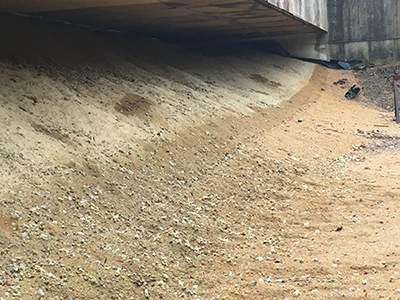
Sand congested with debris including shotgun wads and lead bullets prior to firing range berm refurbishment.

Client:

Prince William County Police Department (PWCPD)

Business Challenge:

  • Active firing range with health and safety concerns associated with berm degradation and debris ricochets, sand compacting and sloughing

Solution:

  • Refurbishment of berm sand, recycling of lead debris, and disposal of non-lead debris as hazardous waste
  • Installation of ballistic rubber along the top of the firing range berm

Results:

  • Removal of over 80K pounds of lead debris from the firing range allowing for the safe use of the firing range without the concern for ricochets

Challenge

The PWCPD has a firing range dedicated to their police department staff as well as police departments in other counties. The firing range is used for training of new police staff and required practice for current officers. The firing range consists of a concrete floor surrounded by concrete walls and wooden baffles (for noise control). At the end of concrete floor is a sand berm approximately 100 feet wide, 18 feet deep, and 8 feet high; concrete walls are present to the left, right, and behind the berm. While the sand berm is mostly covered, rain water is able to enter the back of the berm. Due to the configuration of the firing range, over time and use, sand within the firing range berm becomes congested with debris such as shotgun wads and lead bullets. In addition, weathering causes the sand berm to compact and slough down exposing the concrete behind the sand berm.

PWCPD requested Apex Companies’ support in the refurbishment of the firing range to remove material from the firing range berm and restore the backstop to pre‑excavation grade in accordance with rules and regulations promulgated by the Environmental Protection Agency (EPA) and Virginia Department of Environmental Quality (VDEQ).

Solution

Apex excavated the sand from the backstop; processed the excavated sand using an on-site sifter to segregate gross debris from within the berm; restored the berm to is original grade using the processed sand as well as clean, imported sand; and managed the debris separated from the backstop. Non-lead debris was recycled and lead debris with toxicity characteristic leaching procedure (TCLP) lead concentrations of five parts per million or higher disposed as hazardous waste.

Results

Apex has provided this support to PWCPD on multiple occasions, the most recent effort performed in 2021. Apex’s efforts have removed over 80K pounds of lead debris from the firing range, allowing for the safe use of the range without the concern for ricochets. In addition, the scope of work for the 2021 effort included installation of ballistic rubber along the top of the firing range berm as an added safety precaution.

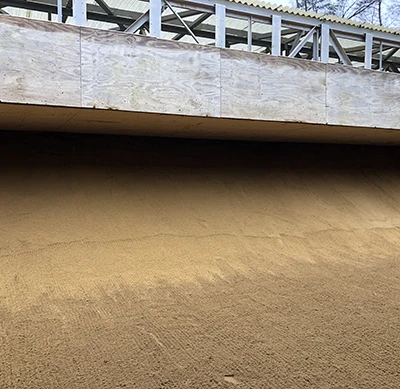
Freshly sifted sand following firing range berm refurbishment to recycle lead debris, and dispose of hazardous waste.

How Can We Help You Succeed?

Remediation and Refurbishment of Police Firing Range Facilities

Environmental Project

Remediation and Refurbishment of Police Firing Range Facilities

Montgomery County Police Department Poolesville, MD

Solution Overview

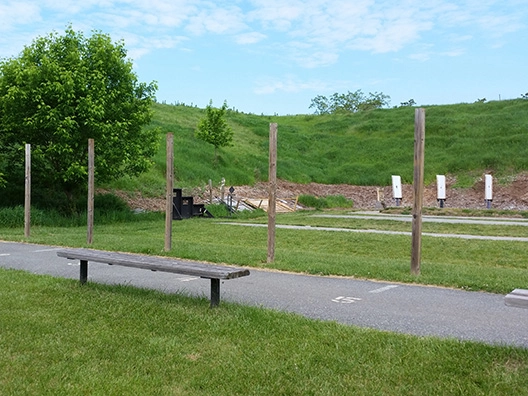
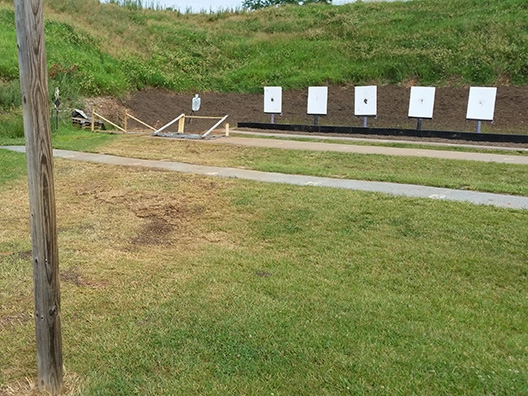
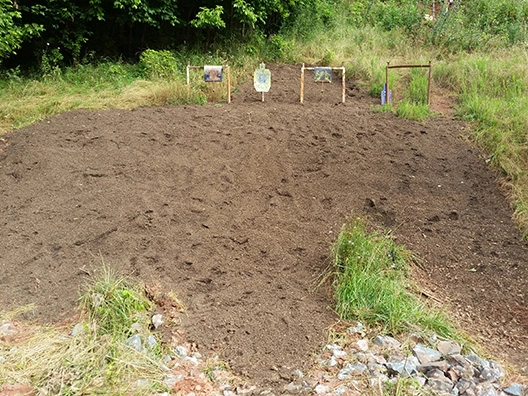
Firing range at the Montgomery County Police Department in Poolesville, MD prior to remediation.

Client:

Montgomery County Police Department

Business Challenge:

  • Active firing range requiring both aesthetic and functional improvements as well as environmental remediation
  • Conditions exacerbated by stormwater impacts and erosion

Solution:

  • Holistic solution to both address lead contamination and modernize the range
  • Step by step plan to address both physical and chemical impacts

Results:

  • A revitalized site with increased functionality
  • Positive feedback from the client who has referred Apex to peers requiring the execution of a similar scope

Challenge

Maryland’s Montgomery County Police Department operates a firing range facility located in Poolesville, Maryland. The firing range consists of four separate ranges including a pistol range, SWAT range, rifle range, and sniper range. Many years of ongoing training at the ranges resulted in numerous environmental impacts. These included impact berms that were heavily eroded and in need of maintenance, backstops that were in terrible shape and in need of restoration, and lead debris and recoverable lead trapped in the berms which required remediation. Stormwater was further eroding these distressed areas and causing runoff of water potentially contaminated with lead and other heavy metals into nearby surface water bodies.

Solution

Montgomery County reached out to Apex Companies to help develop a solution. Apex provided a cost effective and aesthetically pleasing approach that would also modernize the ranges. Apex began by addressing each of the ranges and removing the existing wood chips from the range backstops (approx. 2–3 ft thickness) and stockpiling them on‑site pending subsequent waste management determinations. Apex then excavated approximately two feet of soil from the backstop surface and stockpile on-site (separately from the wood chips) for subsequent waste management. After the soils were removed, Apex restored the backstop to its pre‑excavation grade using imported clay materials. Apex also removed and stockpiled the soil in front of the low, target‑protecting berm(s), and removed and replaced the front timbers with new 6 x 6” pressure treated timbers. In lieu of replacing the soil at the berms, Apex prepared the area for installation of ballistic rubber material in front of the timbers.

To minimize downtime of the ranges and equipment mobilizations and for a cost-effective solution, Apex processed the excavated materials from each of the ranges concurrently, after the ranges were restored to operable conditions. The stockpiled soils and wood chips were then processed through a sifter to segregate the gross metal debris (to the extent practicable). These materials were segregated and containerized in roll-off(s) for off‑site recycling. Following sifting, Apex sampled the sifted soil and wood chip residues for laboratory analyses of Resource Recovery and Conservation Act (RCRA) metals and toxicity characteristic leaching procedure (TCLP) metals to evaluate residual metals concentrations. Apex managed the off-site disposal of the screened soil and wood chips, that could not be reused as non‑hazardous waste. Waste timbers were hauled offsite for disposal as general construction waste.

Montgomery County requested rubber ballistic material (RBM) similar to the Frederick County, MD firing range. Apex performed a site reconnaissance of Frederick County’s range and discussed their RBM with the rangemaster. Apex then installed RBM across the front berm of the pistol and SWAT firing ranges. Based on the dimensions of the existing berms, 165 blocks (24 x 12 x 9” each) were needed.

Results

The client was very pleased with the outcome. As the featured photos show, there was a positive and noticeable aesthetic difference in the ranges post‑refurbishment, while also reducing any potential negative impacts to sensitive environmental receptors. The refurbishment and restoration of the ranges was designed to last for multiple years. As such, Montgomery County recently reached out to provide a positive referral to the Maryland State Police based on the work Apex performed at the county firing ranges in Poolesville.

Firing range remediation project at the Montgomery County Police Department in Poolesville, MD, post‑refurbishment.

How Can We Help You Succeed?

Compliance Assistance and Waste Management Consulting

Environmental Project

Compliance Assistance and Waste Management Consulting

Transportation Technology Center, Inc. (TTCI) Pueblo, CO

Solution Overview

Client:

TTCI

Business Challenge:

  • The need to dispose of 500 tons of mined lead ore used as ballast in rail cars
  • Ballast was found to be characteristic of a hazardous waste
  • Lead was present in both the ore, and soils beneath the ore
  • Beneficial recovery of the ore was considered but was not economically viable

Solution:

  • Develop an on-site treatment plan in cooperation with the Colorado Department of Public Health and Environment (CDPHE)
  • Treatment of ore and soil by MT2 using ECOBOND®, a lead restabilization agent

Results:

  • Reclassification of the previously hazardous ore and soil as a non-hazardous waste following treatment
  • Significant disposal cost savings for the client
  • Reduction of worker exposure for the facility

Challenge

The Transportation Technology Center (TTC) is a federal facility owned by the US Department of Transportation (DOT), Federal Railroad Administration (FRA), and operated by the TTCI, dba MXV Rail. TTCI is a research and test facility dedicated to investigating and improving the safe transportation of commodities, primarily via rail. Other testing and training are also provided at the facility to various international, government, industrial, municipal, and corporate customers. Environmental management program challenges have included generation and management of hazardous and solid waste, air pollution emissions, asbestos, non-transient non‑community drinking water system monitoring, ozone depleting substances (refrigeration equipment), Superfund Amendments and Reauthorization Act (SARA) Title III Tier II reporting, industrial wastewater treatment, water pollution, polychlorinated biphenyls (PCBs), industrial wastewater, mercury containing articles, and petroleum contaminated soils.

In 2010, TTCI discovered 500 tons of lead ore previously used as ballast in rail cars during testing activities. The ballast was found to be characteristic of hazardous waste due to elevated lead content both in the ore and soils beneath the lead ore, at leachable levels exceeding regulations. The provenance of the lead ore was not known, and no documentation could be produced to afford an exemption from a hazardous waste classification under the Bevill Amendment.

Solution

Beneficial use recovery of the lead ore for iron, lead, silver, and other mineral constituents was considered as an option for disposal but was not economically viable.

Onsite treatment of the lead ore and impacted soils with off-site disposal was the only viable option. Apex Companies initiated discussions with the CDPHE to evaluate acceptable treatment options. The CDPHE concurred that the lead ore could be treated onsite in tanks/containers, in accordance with regulations, to remove the lead hazard without a permit, followed by off-site disposal at an approved solid waste landfill.

The lead ore and soil were treated by MT2 Firing Range Services using ECOBOND®, a lead restabilization agent. The lead ore and soil were then reclassified as non‑hazardous solid waste, following verification sampling.

Results

TTCI was able to avoid incurring the costs disposing of 500 tons of hazardous waste. Thankfully, lead contaminated materials are one of the easiest things to treat. Once stabilized, the lead ore and soil could be safely handled and transported to a solid waste landfill for disposal.

How Can We Help You Succeed?

Natural Resources Management Plan and Biological Opinion

Environmental Project

Natural Resources Management Plan and Biological Opinion

Department of Defense (DoD) Defense Fuel Support Point (DFSP) San Pedro, CA

Solution Overview

Natural Resources Management Plan and Biological Opinion

Client:

DoD DFSP

Business Challenge:

  • Understand and mitigate project-related ecological impacts

Solution:

  • In depth understanding of natural resource permitting requirements

Results:

  • De minimis impact to ecologically
    managed areas

Challenge

Apex Companies' ongoing Environmental Services contract at the DoD, 350-acre, DFSP San Pedro former bulk fuel terminal facility (the Site) includes the management of operations associated with a facility-specific Integrated Natural Resources Management Plan (INRMP) and a Site-specific Biological Opinion (BO). These documents were developed to avoid, minimize, and offset potential impacts to identified biologically sensitive areas (habitat areas) and threatened and endangered (T&E) species which collectively are present in Listed Species Management (LSM) areas of the Site.

Solution

Apex’s work at the Site has included preparing the most recent update to the Site-wide BO and ensuring the work completed at the Site by DoD contractors is completed accordance with the BO. In our role of providing environmental services at the facility, Apex is responsible for developing biologic informational brochures and to provide in-briefings to personnel and contractors new to the Site.

Recently, Apex was tasked with the design, permitting, construction, and commissioning of a new 34.5-kV electrical distribution system and a natural gas distribution network within the Tank Farm area of the Site. Once installed, these systems were used to provide energy to 13 soil and groundwater remediation systems. These remediations systems include the largest combined, in situ thermal soil and groundwater remediation project completed in the United States.

The proposed installation of the natural gas and electric supply features at this DoD site required Apex to coordinate with the Defense Logistics Agency (DLA), the Navy, and the US Fish and Wildlife Service (FWS) before field operations could commence. As part of this coordination work, Apex prepared and submitted Environmental Aspects and Requirements Review (EARR) forms for Navy review, processing, and approval—a critical step in the preparation to mobilize teams to the field.

Results

Our team completed the EARR process and coordinated schedules while working closely with the Navy’s biologist who provided oversight during field tasks. During the field work, the electrical distribution network of wires and power poles required transits of greater than 1,000 feet in length through LSM areas. Through careful planning and field work execution, the impact to ecologically managed areas was de minimis with the result that no LSM areas were lost—a testament to our ability to strategically follow the requirements of the BO.

How Can We Help You Succeed?

Endangered Species Survey for Linear Transmission Project

Environmental Project

Endangered Species Survey for Linear Transmission Project

Confidential Utility Company Oklahoma and Arkansas

Solution Overview

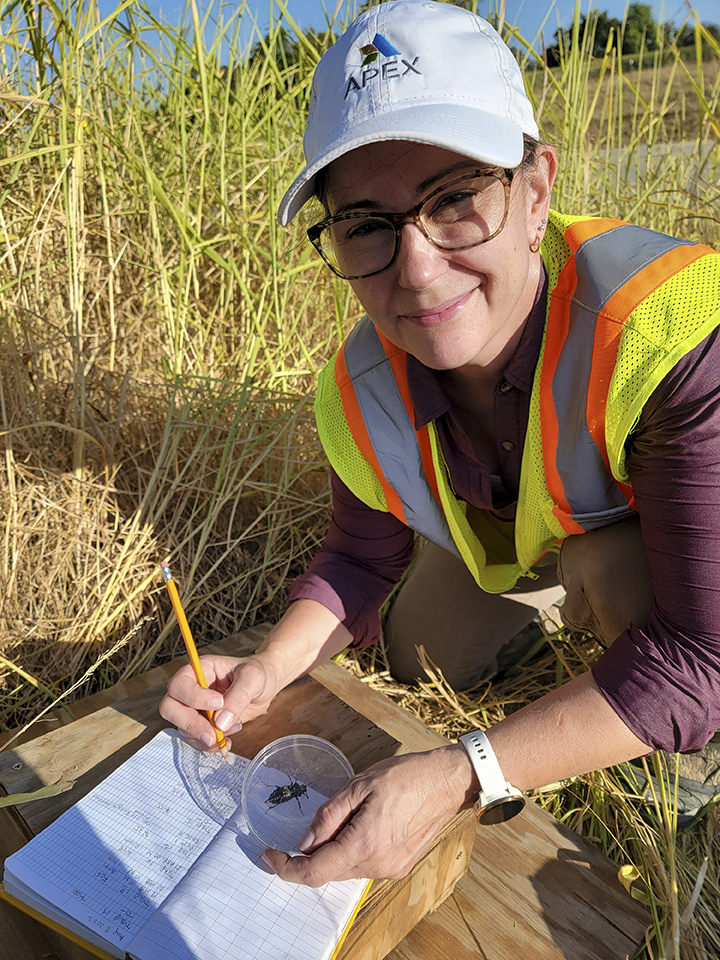
Dr. Amy Smith assessing impacts to the American burying beetle for a proposed transmission line through potential habitat

Client:

Confidential utility company

Business Challenge:

  • Understand endangered species impacts for utility expansion project

Solution:

  • Subject matter expertise to ensure minimal impacts while maximizing time and budgetary constraints

Results:

  • Project completed on time and under budget with full understanding of habitat mitigation needs

Challenge

When a utility company looks to expand its transmission lines, it must perform numerous assessments and due diligence tasks to ensure that the impacts to the community and the natural environment are mitigated. This includes quantifying endangered species along the proposed transmission line. Dr. Amy Smith, division manager for Apex’s Oklahoma operations, led a team to assess the impacts to the federally endangered American burying beetle (ABB) for a proposed 600 kilovolt (kV) transmission line through 209 miles of potential habitat in Oklahoma and Arkansas using geographical information system (GIS) modeling which reduced further survey and mitigation needs.

The client proposed to develop a 600kV direct current transmission system to deliver 3,500 megawatts of electricity from renewable energy facilities in the Oklahoma Panhandle to entities in the Mid-South and Southeastern US by connecting with the Tennessee Valley Authority. But the proposed route crossed 209 miles within the range of the ABB. At the time, 2014, the US Fish and Wildlife Service (USFWS) was requiring that impacts to suitable habitat occupied by ABBs be offset through mitigation. The sheer size of the project prohibited a full, field habitat survey.

Solution

Dr. Smith used her knowledge of the ABB life cycle, USFWS regulations, and statistics to co-develop a GIS model that identified unfavorable habitat. The predictive value of the GIS model was evaluated by ground-truthing habitat from publicly accessible locations at randomly generated locations which limited coordination with landowners along the proposed, but not finalized, route.

Results

This project was completed on time and under budget. The results of the GIS model saved the client time and money by reducing the need for additional surveys in an unsuitable habitat as well as mitigation. The model also provided a map of unsuitable habitat for micrositing of structures to further reduce impacts to the ABB.

How Can We Help You Succeed?

Capabilities Inquiry