





A Timeline of Recent Stormwater Regulatory Policies

The earliest law to address water quality in the United States was the Federal Water Pollution Control Act of 1948, which in 1972 was amended and became known as the Clean Water Act (CWA). The CWA is the primary law governing stormwater, but it is complimented, or some may argue, complicated, by various state and local laws that have also been enacted in more recent years, often with more stringent regulatory requirements. The following timeline provides an overview of some of the more recent developments in stormwater policy that may affect your business. For additional information, we invite you to contact us, and to follow our blog for updates to this timeline, and our other useful resources.

Stormwater Regulatory Policies

2015
Clean Water Rule or Waters of the US (WOTUS) rule passed by EPA and the United States Army Corps of Engineers

Clean Water Rule or Waters of the US (WOTUS) rule passed by EPA and the United States Army Corps of Engineers

Federal Policy/Regulation

Expands the Clean Water Act (CWA) to include wetlands, smaller ephemeral streams, including compliance for discharges into dry streams, thereby increasing stormwater compliance exposure.

2015
Industrial Permit Requires Certified Registered Professional (QISP) to Implement the Permit

Industrial Permit requires Qualified Industrial Stormwater Practitioner (QISP) for permit implementation

California Policy/Regulation

Only QISP certified stormwater professionals can perform Stormwater Pollution Prevention Plan (SWPPP) functions, requiring additional expertise to implement permits.

2017
President Trump issues Executive Order to roll back WOTUS rule issued in 2015

President Trump issues Executive Order to roll back WOTUS rule issued in 2015

Federal Policy/Regulation

Reversion to narrower definition of which water bodies are regulated under the CWA, primarily impacting the industry and farming communities.
2018
Addition of Total Maximum Daily Loads (TMDLs) into the National Pollutant Discharge Elimination System (NPDES) Permits by the California State Water Resources Control Board

Addition of Total Maximum Daily Loads (TMDLs) into the National Pollutant Discharge Elimination System (NPDES) Permits by the California State Water Resources Control Board

California Policy/Regulation

NPDES Permits include numerical limits and exceedances carry financial penalties. Clients must install best management practices (BMPs) to ensure discharges are not exceeding limits.

2020
Maui Case: Point source discharge to a jurisdictional water through groundwater

Maui Case: Point source discharge to a jurisdictional water through groundwater

Federal Policy/Regulation

The case asked whether the CWA requires a permit when pollutants that originate from a non-point source can be traced to reach navigable waters through mechanisms such as groundwater transport. The ruling by the US Supreme Court that non-point source discharges do require a permit when they are equivalent to direct discharges increases compliance exposure for infiltration BMPs, establishing connectivity between stormwater and groundwater. Those who discharge must ensure no direct or indirect connection to a surface water via groundwater.

2021
Corona Clay case ruling expands of citizens ability to sue for violations of CWA

Corona Clay case ruling expands of citizens ability to sue for violations of CWA

California Policy/Regulation

Similar to the Maui Case, the ruling by California’s 9th Circuit Court of Appeals held that previously occurring CWA violations could be brought to suit by private citizens increasing risk of litigation for ongoing or historical discharges.

2021
Biden Administration Executive Order: Reinstates 2015 USACOE broad definition of WOTUS

Biden Administration Executive Order: Reinstates 2015 USACOE broad definition of WOTUS

Federal Policy/Regulation

Biden’s reinstatement of the 2015 WOTUS rule expands the definition of a waterbody under the CWA to include smaller ephemeral streams, and requires compliance for discharges into dry streams and dry ditches.

2021
Multi-Sector General Permit (MSGP) revised and updated to include Universal Benchmark Monitoring, public signage, and technology‑based effluent limits

Multi-Sector General Permit (MSGP) revised and updated to include universal benchmark monitoring, public signage, and technology‑based effluent limits

Federal Policy/Regulation

The MSGP is beginning to look more like the California Industrial General Permit (IGP). Those outside of California who are covered under the MSGP or other state permits will be required to implement more BMPs, monitoring, and actions. State permits cannot be less stringent than the federal MSGP.

2021
Voters approve “Measure W”, which created a special parcel tax in the Los Angeles County Flood Control District (LACFCD) to fund stormwater Capture and Reuse Projects

Voters approve “Measure W,” which created a special parcel tax in the Los Angeles County Flood Control District (LACFCD) to fund stormwater capture and reuse projects

California Policy/Regulation

This measure is the first large-scale stormwater fee system to capture and reuse stormwater in the west. Businesses can seek parcel tax reductions, engineer infiltration features, or reuse stormwater to reduce parcel taxes.

2023
Great Blue Heron in a frenzied water bath in a wetland that is part of the waters of the United States (WOTUS) and Clean Water Act.

The Supreme Court delivers a decision limiting the Environmental Protection Agency’s (EPA) jurisdiction to enforce the Clean Water Act (CWA) as it relates to wetlands in the United States.

Federal Policy/Regulation

The specific case, Sackett v. EPA, involved a couple who were fined for filling in a wetland without a permit on a residential property they purchased in 2003.
Earth Day, Every Day!

This seems like this is a phrase we hear with increasing frequency as we approach celebrating Earth Day, but then a few weeks later we have all returned to our everyday routines.

But are things finally shaping into a new normal? Over the past two years, we have experienced more change than we ever thought possible—a global pandemic, an economic shutdown, and in parallel, a growing focus on climate change, leading up to the SEC’s recent announcement to incorporate climate data into public firms’ financial disclosures.

And in concert with these elements, a refreshed and progressive approach to diversity, equity, and inclusion (DEI) within large and small, public, and private organizations, and a renewed commitment to environmental justice by our federal government and their state counterparts.

Has humanity reached a new level of enlightenment?

Perhaps.

But then we turn around and we also see devastation of the worst type in Ukraine, with global humanitarian and environmental repercussions that are certain to extend well into the future.

Two steps forward, one step back? So much progress and then, regression.

Within our own organization, we have been excited to bring together elements across each of these areas and to launch our own internal Apex Companies environmental, social, and governance (ESG) and DEI resource library. As our team worked to develop these materials, we were struck by how critical it is to establish community and connection and to have programs and policies that are authentic and fit within our existing company culture.

One of the resources we identified during this process is “Habits of the Heart” by Parker J. Palmer. These “habits” offer a unique perspective on deeply ingrained ways of seeing, being, and responding to life that involve our minds, our emotions, our self-images, our concepts of meaning and purpose. The five habits are as follows:

  1. An understanding that we are all in this together.
  2. An appreciation of the value of “otherness.”
  3. An ability to hold tension in life-giving ways.
  4. A sense of personal voice and agency.
  5. A capacity to create community.

As we build our own programs, we seek to practice these five habits, and we encourage you to do the same. Why? Because the human aspect of residing on earth cannot be ignored. It is humans that have the power to destroy and humans that have the power to heal. It is humans that start and end devastating wars, and that disregard or villainize those that look different or believe in different things.

When we honor our own voice, that of others, and can live in harmony despite our differences, and seek to use our power and our energy for good, we can see that we are indeed all in this together…and that is where community arises.

We only have this one life, and one planet. Let’s practice ways to honor it, and all the people and creatures who inhabit it.

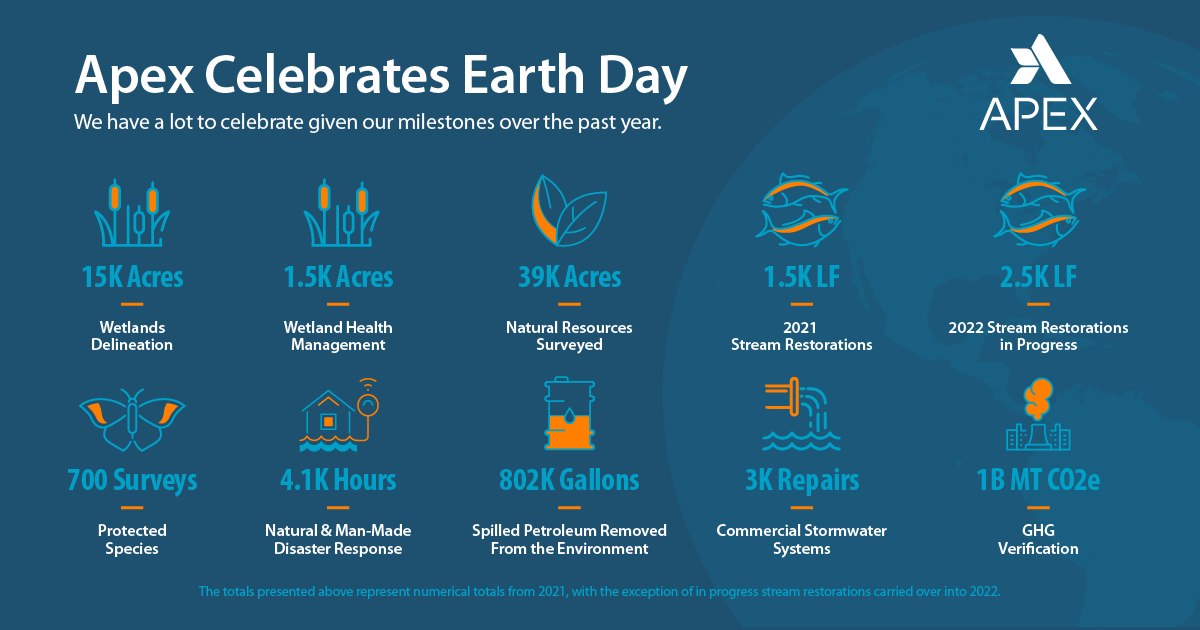
Earth Day 2022

PFAS in Manufactured Goods—A Review of the Regulatory Landscape

One of the most common questions we are asked regarding per- and polyfluoroalkyl substances (PFAS) is—”Is the government regulating their inclusion in manufactured goods?” Given that certain PFAS have been tied to adverse human health and ecological impacts, folks are rightly concerned. Are there labeling requirements? Are manufacturers still allowed to use PFAS in their production line, and can items that contain PFAS be imported into the US? This is a complicated topic, as there are thousands of PFAS, and only a small subset has been researched to date. Furthermore, the business landscape varies state by state and depending on what products are being manufactured or imported.

Let’s start with a look at federal regulations, and then review some states that are imposing additional regulations. For this discussion, we will focus on consumer goods and discuss aqueous film-forming foam (AFFF) product regulations in a future post.

Federal Regulatory Actions for PFAS in Manufactured Goods

The US Environmental Protection Agency (EPA) has taken a range of actions to address PFAS in manufactured goods, under the Toxic Substances Control Act (TSCA). These actions date back to 2002, and are still being built upon today, with the most recent update in March 2022. Large manufacturing companies have also been voluntarily phasing out certain longer-chain PFAS and some precursor compounds since at least 2000.

In 2002, the EPA published a Significant New Use Rule (SNUR) to require notification to the EPA before any future manufacturing or importing of 13 specific PFAS. This SNUR allowed for continuation of a few limited uses of these chemicals. Later, in 2002, the EPA published a second SNUR to require notification to the EPA before any future manufacturing and importing of 75 specific PFAS, with a few exceptions.

In 2006, the EPA initiated a PFAS Stewardship Program, where they invited the eight major companies in the PFAS production industry (the participating companies were Arkema, Asahi, BASF Corporation, Clariant, Daikin, 3M/Dyneon, DuPont, and Solvay Solexis) to join together to reduce use of perfluorooctanoic acid (PFOA), precursor chemicals that can break down to PFOA, and related chemicals by 2010, and to work towards elimination of these chemicals from emissions and products by 2015. These goals were eventually met; however, the use of PFAS has not been fully restricted to date, and products manufactured or imported prior to 2015 may still contain PFOA (and related chemicals).

In 2007, the EPA issued another SNUR that regulated the use of 183 PFAS that were generally considered as no longer manufactured, imported, or used in the US due to their suspected toxicity. This SNUR required a 90-day notification before commencing manufacture using any of the 183 PFAS or import of products containing these PFAS, which was effective only through the end of 2007.

In 2013, the EPA issued a rule to require carpet manufacturers to report all new uses of certain PFAS in carpeting, as it was being utilized to make carpets stain-resistant.

In 2015, the EPA proposed another SNUR that would require manufacturers and importers of PFOA and PFOA-related chemicals to notify the EPA at least 90 days prior to starting or resuming new uses of these chemicals in any products. This rule was proposed in order to give the EPA time to evaluate potential new uses of PFOA and if needed, prohibit or limit their use.

In 2016, TSCA was amended, and the EPA then worked to develop a supplemental SNUR regarding the import of certain longer-chain PFAS in specific categories. This SNUR was finalized in July 2020 and prohibits the import of certain longer-chain PFAS as part of surface coatings without an EPA review, and requires EPA notice and review before an entity can begin manufacturing with certain longer-chain PFAS.

In October 2021, the EPA developed a testing strategy that will require PFAS manufacturers to provide the agency with toxicity data so that EPA may consider additional future regulations. Most PFAS that are used in manufactured goods have very little toxicity information available; therefore, this EPA strategy is aimed at addressing that data gap.

Most recently, in March 2022 the EPA provided information to certain manufacturers and importers regarding the likelihood for PFAS to also be present in fluorinated high-density polyethylene (HDPE) containers and other similar plastics. This information was provided in the form of an open letter, and was conducted in line with EPA’s PFAS Strategic Roadmap goals. In addition, the EPA started the process of removing two PFAS from the EPA Safer Choice program, so as to protect consumers from products containing these chemicals.

State Regulatory Actions for PFAS in Manufactured Goods

Many states have started to apply more stringent regulations regarding PFAS in manufactured goods, based on concerns that the EPA is not moving fast enough and associated human health risks posed by PFAS. The following regulations are outlined by state, in as chronological an order as possible:

Washington: In 2018, Washington passed a law to ban the use of certain PFAS in food packaging, effective January 2022 which had been contingent on whether safer alternatives were identified by January 2020. Washington also passed a law in 2018 that manufacturers that sell personal protective equipment (PPE) must provide written notice if the PPE contains PFAS.

On March 31, 2022, Washington passed House Bill 1694, which requires its Department of Ecology to name certain PFAS -containing products including nonstick cookware, personal care products, cleaning agents, water-repellant clothing and gear, automotive products, and waxes and sealants for floors, skis, and cars, as well as PFAS-containing firefighting gear as “priority products” under the state’s Safer Products For Washington Initiative. This means that the state has accelerated the evaluation of these products for safer alternatives, with a deadline of 2024, bypassing its typical five year waiting period, with final regulations required by 2025.

New York: In January 2019, New York passed a similar law requiring written notice for PPE containing PFAS. In December 2020, New York also passed a law that bans the sale of food packaging containing certain PFAS, effective December 31, 2022.

New Hampshire: In September 2019, New Hampshire followed suit and also passed a law requiring written notice for PPE containing PFAS.

Maine: In June 2019, Maine passed a law banning the use of certain PFAS in food packaging, provided that safer alternatives are available.

California: In September 2020, California passed a law that beginning January 1, 2022, requires manufacturers that sells PPE provide written notification if it contains PFAS, similar to other states.

In October 2021, California also passed a law that will ban the use of certain PFAS in select consumer products, including car seats, cribs, bassinets, playmats, playpens, strollers, and disposable food packaging. The law stipulates that a manufacturer must use the least toxic alternative when replacing PFAS in a juvenile product (i.e., products designed for use by infants and children). This ban takes effect on July 1, 2023. In addition, the law requires warning labels on cookware made with certain PFAS, starting in 2024.

Vermont: In May 2021, Vermont passed a law that restricts the sale of consumer products that contain PFAS, and bans PFAS from some select products including food packaging, ski wax, children’s products, and carpets. In addition, the law requires that manufacturers that sell PPE must provide written notice if it contains PFAS.

Connecticut: In June 2021, Connecticut passed a law that prohibits the use of PFAS in food packaging, effective December 31, 2023.

It is likely that these and other states will continue to regulate the use of PFAS in manufactured products. If you reside in a state that does not currently regulate PFAS in manufactured goods, rest assured that the EPA is also taking action to reduce and eliminate these chemicals. If you have any questions or concerns, please feel free to contact us for additional information.

For further reading:
US EPA PFAS Website
US FDA PFAS Website
ITRC PFAS Guidance Document

PFAS National Datasets now Available

As part of EPA’s PFAS Strategic Roadmap, the organization recently published a large collection of PFAS datasets. These datasets pull publicly reported information from states and local jurisdictions that have their own regulatory sampling programs and combine it with data collected by the EPA. Because each jurisdiction may follow different sampling guidance, collection methodologies, or may have different regulations with regard to PFAS, the datasets should be used as a tool, but not an exhaustive resource. The data is current as of January and February 2022 and includes the following information:

  • Water Quality Portal information, which includes PFAS sampling results for over 80,000 samples of water, soil, sediment, and biota (tissue) uploaded by federal, state, tribal, and local governments, academic and non-governmental organizations, and individuals
  • PFAS drinking water testing data collected during UCMR 3 between 2012 and 2016 (dataset will be updated again once UCMR 5 sampling begins in 2023)
  • PFAS drinking water testing data provided by multiple states
  • Chemical data reporting (CDR) as required under the Toxic Substances Control Act (TSCA) for production and importation of manufactured goods
  • A list of superfund sites with PFAS detections
  • PFAS data related to sampling under a National Pollutant Discharge Elimination System (NPDES) permit
  • A list of federal sites with known or suspected PFAS impacts
  • A list of industry sectors potentially handling or releasing PFAS
  • A list of fire training sites where PFAS-containing aqueous film-forming foam (AFFF) may have been handled or released
  • A list of historical and current records from Federal Aviation Administration (FAA) airport data
  • A list of PFAS waste transfers as determined from waste manifest information
  • A list of AFFF releases as reported to the National Response Center going back to 1990
  • Lists of toxics release inventory (TRI) PFAS releases, transfers, and waste management

As noted, this data is not complete, as most of the data included are not required to be reported. Therefore, the data may be biased towards locations where more testing and reporting is being conducted and may not be fully accurate. However, as part of EPA’s Strategic Roadmap, EPA plans on continuing to compile data and information regarding PFAS testing and releases to support future decision-making by government agencies, companies, and the public. Many of the datasets will be updated at regular intervals as data continues to be provided, so stay tuned!

Industry Alert: Securities and Exchange Commission 17 CFR 210, 229, 232, 239, and 249

Proposed Rule: The Enhancement and Standardization of Climate-Related Disclosures for Investors

The Securities and Exchange Commission (SEC) announced long-awaited guidance that will add climate reporting requirements to the list of disclosures for publicly traded companies. The proposed rules allow for a 60-day comment period and would go into effect following a phased approach starting in 2023.1

SEC Chair Gary Gensler commented on the role the organization plays in helping investors make investment risk decisions,2 “Today, investors representing literally tens of trillions of dollars support climate-related disclosures because they recognize that climate risks can pose significant financial risks to companies, and investors need reliable information about climate risks to make informed investment decisions. Today’s proposal would help issuers more efficiently and effectively disclose these risks and meet investor demand, as many issuers already seek to do.”

What does this mean for you?

Governance of Climate Risk: All publicly traded companies will be required to state the degree of risk related to climate change within its current business and operational model. If a company defines climate risk as material, it will be required to report the nature of the risk, and its plans to mitigate risk related to its climate and performance data. This will be required annually in the 10-K filing.

All publicly traded companies will need to conduct climate scenario planning. There’s no rule yet on how often, however, this is how a company will determine the degree of risk they face.

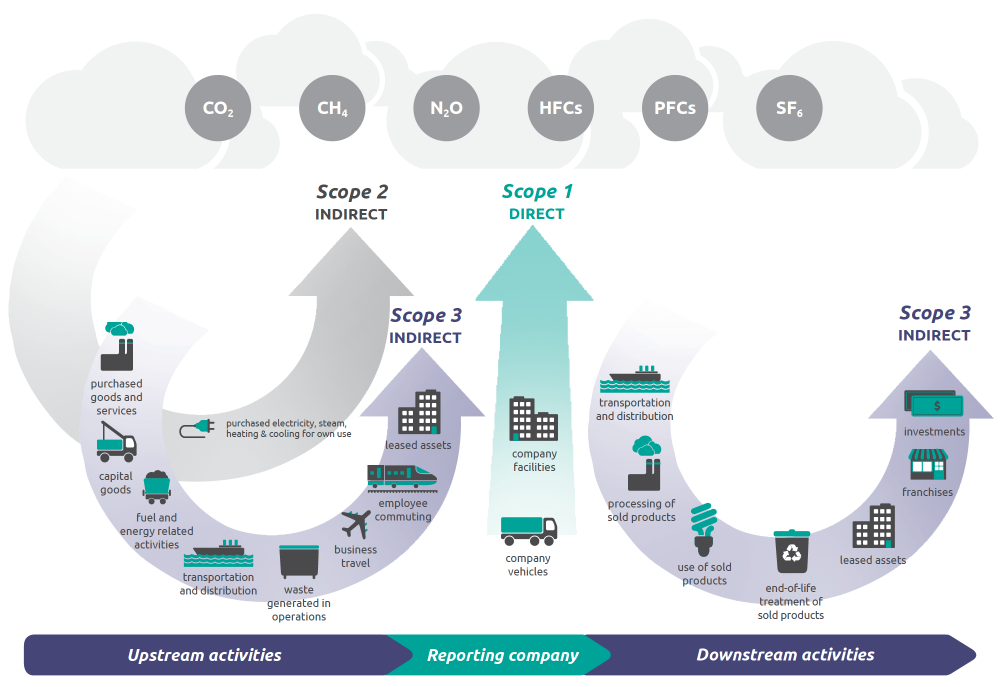
ESG Data Requirement: Companies will be required to publish Scope 1 and 2 emissions annually. Additionally, if it resides in a “material” risk industry—a company will also have to disclose Scope 3.

Governance of ESG Data:

  • Public companies above a certain market cap threshold will be required to audit and 3rd-party verify climate-related performance data reported in 10-K filings annually.
  • 10-K statements will also require that the company outline climate-related targets, goals, and transition plans, if any.

For explanatory purposes, the following tables assume that the proposed rules will be adopted with an effective date in December 2022 and that the filer has a December 31, 2022 fiscal year-end:

Registrant Type Disclosure Compliance Date
  All proposed disclosures, including GHG emissions metrics: Scope 1, Scope 2, and associated intensity metric, but excluding Scope 3 GHG emissions metrics: Scope 3 and associated intensity metric
Large Accelerated Filer Fiscal year 2023 (filed in 2024) Fiscal year 2024 (filed in 2025)
Accelerated Filer and Non‑Accelerated Filer Fiscal year 2024 (filed in 2025) Fiscal year 2025 (filed in 2026)
SRC Fiscal year 2025 (filed in 2026) Exempted
Filer Type Scopes 1 and 2 GHG Disclosure Compliance Date Limited Assurance Reasonable Assurance
Large Accelerated Filer Fiscal year 2023 (filed in 2024) Fiscal year 2024 (filed in 2025) Fiscal year 2026 (filed in 2027)
Accelerated Filer Fiscal year 2024 (filed in 2025) Fiscal year 2025 (filed in 2026) Fiscal year 2027 (filed in 2028)

Source: SEC3

Scope 1, 2, and 3
Source: EPA4

What are Scope 1, 2, and 3 emissions?

Scope 1 emissions are direct greenhouse (GHG) emissions that occur from sources that are controlled or owned by an organization (e.g., emissions associated with fuel combustion in boilers, furnaces, vehicles).

Scope 2 emissions are indirect GHG emissions associated with the purchase of electricity, steam, heat, or cooling. Although Scope 2 emissions physically occur at the facility where they are generated, they are accounted for in an organization’s GHG inventory because they are a result of the organization’s energy use.

Scope 3 emissions are often known as value chain emissions because they represent all indirect impacts upstream and downstream of an organization that is not already captured in Scope 1 and 2 reporting. Companies measuring their Scope 3 emissions face barriers not present or as extensive when measuring Scope 1 and 2 emissions from their operations.

What do you need to do?

Apex can help you prepare for this coming regulation. While larger, public firms from a handful of sectors will be primarily impacted by this guidance, it will be important for all organizations to prepare, as diverse stakeholder groups will expect all companies to follow new best practices.

A few areas to look at now are outlined below:

Gap Assessment: Understand where your organization stands today; perform internal assessments or hire a third party to help evaluate your existing program against changing standards.

Climate Action Plan: Create a meaningful climate action plan which has been informed by gap assessments, climate scenario assessments, and global frameworks to ensure it addresses all relevant risks and opportunities.

Data Management: Inventory current data available to the decision makers. Benchmark the last fiscal year to create a baseline. Over time, this data can then inform improvements to the action plan and provide the performance data required for companies where climate is materially relevant.

Relevant Apex Offerings

  • Gap assessments
  • ESG materiality assessment
  • Climate scenario assessment
  • ESG and climate program development
  • Data management, inventory, and baselining
  • ESG score card and KPI development
  • ESG metrics; standards setting/alignment
  • Data preparedness (3rd party verification/audit preparedness)
  • 3rd party data verification and audit of ESG metrics

1 https://www.sec.gov/rules/proposed/2022/33-11042.pdf
2 https://www.sec.gov/news/press-release/2022-46
3 https://www.sec.gov/files/33-11042-fact-sheet.pdf
4 https://www.epa.gov/climateleadership/scope-1-and-scope-2-inventory-guidance

A Timeline of Major US Environmental Milestones

Have you ever wondered about how the environmental consulting industry took shape? Driven by a series of groundbreaking laws enacted by both state and federal agencies, and beginning in 1916 with the creation of the National Park Service, it is hard to imagine a time and place when and where our most precious natural resources were not protected with a mindset of preservation for future generations. Looking back, we realize how far we have come, paving the way for many other nations across the globe. We hope that this timeline puts our journey into perspective. We will continue to update it as new landmark laws are enacted. Thanks for visiting Apex Companies, and may we all seek to make the world a better place than we found it.

Major US Environmental Milestones

1916
Creation of National Park Service

Creation of National Park Service

National Park Service Organic Act created the National Park Service.

Administration: Woodrow Wilson

1947

Los Angeles Air Pollution Control District created

First air pollution agency in the US.

Administration: Harry S. Truman

1948

Federal Water Pollution Control Act

First major US law to address water pollution.

Administration: Harry S. Truman

1955
National Air Pollution Control Act

National Air Pollution Control Act

First federal legislation involving air pollution. This Act provided funds for federal research in air pollution.

Administration: Dwight D. Eisenhower

1959

California Motor Vehicle Pollution Control Board Established

Created to test automobile emissions and set standards.

Administration: Dwight D. Eisenhower

1963

Clean Air Act

First federal legislation regarding air pollution control. Amended in 1965, 1966, 1967, 1969, 1970, 1977, 1990.

Administration: John F. Kennedy

1964

Wilderness Act

Established the National Wilderness Preservation System, a national network of more than 800 federally-designated wilderness areas.

Administration: Lyndon B. Johnson

1965
National Emissions Standards Act

National Emissions Standards Act

Represents an evolving federal framework within which automobile pollution has been regulated.

Administration: Lyndon B. Johnson

1965

Motor Vehicle Air Pollution Control Act

Amended the 1963 Clean Air Act and set the first federal vehicle emissions standards, beginning with the 1968 models.

Administration: Lyndon B. Johnson

1965
Solid Waste Disposal Act

Solid Waste Disposal Act

Described by the EPA as “the first federal effort to improve waste disposal technology.”

Administration: Lyndon B. Johnson

1967

California Air Resources Board (CARB) Established

CARB (or ARB) is the “clean air agency” in the government of California. The board set emissions standards predating EPA.

Administration: Lyndon B. Johnson

1967

Air Quality Act

Amendment to the Clean Air Act. Enacted in order to expand federal government activities and also authorized expanded studies of air pollutant emission inventories, ambient monitoring techniques, and control techniques.

Administration: Lyndon B. Johnson

1969

Federal Coal Mine Health and Safety Act

Generally referred to as the Coal Act, the most comprehensive and stringent Federal legislation governing the mining industry to date.

Administration: Lyndon B. Johnson

1969
National Environmental Policy Act (NEPA)

National Environmental Policy Act (NEPA)

One of the first laws ever written that establishes the broad national framework for protecting our environment.

Administration: Lyndon B. Johnson

1970

Reorganization Plan No. 3

Created the Environmental Protection Agency (EPA) by Presidential Executive Order.

Administration: Richard M. Nixon

1970

Clean Air Act (Extension)

Major rewrite of CAA, setting National Ambient Air Quality Standards (NAAQS), New Source Performance Standards (NSPS) Hazardous Air Pollutant standards, and auto emissions tailpipe standards.

Administration: Richard M. Nixon

1970

Creation of OSHA and NIOSH

The Williams-Steiger Occupational Safety and Health Act created OSHA and NIOSH.

Administration: Richard M. Nixon

1970
Environmental Quality Improvement Act

Environmental Quality Improvement Act

Passed to work in conjunction with the National Environmental Policy Act of 1969 (NEPA).

Administration: Richard M. Nixon

1971

Lead-Based Paint Poisoning Prevention Act

Law covering lead-based paint in Federally associated housing. Amended by Title X in 1992.

Administration: Richard M. Nixon

1972

Federal Water Pollution Control Amendments of 1972

Growing public awareness and concern for controlling water pollution led to sweeping amendments in 1972 of the Federal Water Pollution Control Act of 1948.

Administration: Richard M. Nixon

1972

Federal Insecticide, Fungicide, and Rodenticide Act (FIFRA)

The Federal Environmental Pesticide Control Act amended FIFRA in 1972. Also amended by Food Quality Protection Act of 1996.

Administration: Richard M. Nixon

1972
Marine Protection, Research, and Sanctuaries Act

Marine Protection, Research, and Sanctuaries Act

Also known as the Ocean Dumping Act, prohibits dumping into the ocean material that would unreasonably degrade or endanger human health or the marine environment.

Administration: Richard M. Nixon

1973

Endangered Species Act

Provides a program for the conservation of threatened and endangered plants and animals and the habitats in which they are found.

Administration: Richard M. Nixon

1974
Safe Drinking Water Act

Safe Drinking Water Act

Established to protect the quality of drinking water in the US. This law focuses on all waters actually or potentially designed for drinking use, whether from above ground or underground sources.

Administration: Richard M. Nixon

1975

Hazardous Materials Transportation Act

Empowered the Secretary of Transportation to designate as hazardous material any “particular quantity or form” of a material that “may pose an unreasonable risk to health and safety or property.”

Administration: Gerald R. Ford

1976

Resource Conservation and Recovery Act (RCRA)

Commonly referred to as RCRA, our nation’s primary law governing the disposal of solid and hazardous waste.

Administration: Gerald R. Ford

1976
Toxic Substances Control Act (TSCA)

Toxic Substances Control Act (TSCA)

Provides EPA with authority to require reporting, record-keeping and testing requirements, and restrictions relating to chemical substances and/or mixtures.

Administration: Gerald R. Ford

1977

Clean Water Act

Amended FWPCA of 1972.

Administration: Gerald R. Ford

1977

Surface Mining Control and Reclamation Act

Prohibits surface coal mining within the boundaries of any unit of the National Park System.

Administration: Gerald R. Ford

1978

National Energy Conservation Policy Act

Purposes are to provide for the regulation of interstate commerce, to reduce the growth in demand for energy, and to conserve non-renewable energy resources without inhibiting beneficial economic growth.

Administration: Jimmy Carter

1980

Comprehensive Environmental Response, Compensation, and Liability Act (CERCLA)

Otherwise known as CERCLA or Superfund, provides a Federal “Superfund” to clean up uncontrolled or abandoned hazardous-waste sites as well as accidents, spills, and other emergency releases of pollutants and contaminants into the environment.

Administration: Jimmy Carter

1980
Alaska National Interest Lands Conservation Act

Alaska National Interest Lands Conservation Act

Created most of the national parklands in Alaska.

Administration: Jimmy Carter

1980

Fish and Wildlife Conservation Act

Enacted to protect fish and wildlife when federal actions result in the control or modification of a natural stream or body of water.

Administration: Jimmy Carter

1982

Nuclear Waste Policy Act

Supports the use of deep geologic repositories for the safe storage and/or disposal of radioactive waste.

Administration: Ronald Reagan

1986

Safe Drinking Water Act Amendments of 1986

These first major amendments were largely intended to increase the pace at which EPA regulated contaminants and to increase the protection of groundwater sources of drinking water.

Administration: Ronald Reagan

1986
Emergency Planning and Community Right-to-Know Act (EPCRA)

Emergency Planning and Community Right-to-Know Act (EPCRA)

Created to help communities plan for chemical emergencies. It also requires industry to report on the storage, use, and releases of hazardous substances to federal, state, and local governments.

Administration: Ronald Reagan

1986

Superfund Amendments and Reauthorization Act (SARA)

Amended the Comprehensive Environmental Response, Compensation, and Liability Act of 1980 (CERCLA) making several important changes and additions to the program.

Administration: Ronald Reagan

1987

Water Quality Act

Amended FWPCA of 1972.

Administration: Ronald Reagan

1989

Basel Convention

Establishes standards for the transboundary movement of hazardous waste, solid waste, and municipal incinerator ash, including notice to and written confirmation from the receiving country prior to export.

Administration: Ronald Reagan

1989
Montreal Protocol

Montreal Protocol

International treaty designed to protect the ozone layer by phasing out the production of numerous substances that are responsible for ozone depletion.

Administration: Ronald Reagan

1990

Clean Air Act Amendments of 1990

Set new automobile emissions standards, low-sulfur gas, required Best Available Control Technology (BACT) for toxins, and reduction in CFCs.

Administration: George Bush

1990
Oil Pollution Act of 1990

Oil Pollution Act of 1990

Streamlined and strengthened EPA’s ability to prevent and respond to catastrophic oil spills. A trust fund financed by a tax on oil is available to clean up spills when the responsible party is incapable or unwilling to do so.

Administration: George Bush

1991

Intermodal Surface Transportation Efficiency Act (ISTEA)

One of the ISTEA chief goals was to develop a National Intermodal Transportation System that is economically efficient and environmentally sound, provides the foundation for the nation to compete in the global economy, and will move people and goods in an energy-efficient manner.

Administration: George Bush

1992
Residential Lead-Based Paint Hazard Reduction Act

Residential Lead-Based Paint Hazard Reduction Act

Also known as Title X, passed to protect families from exposure to lead from paint, dust, and soil.

Administration: George Bush

1993

North American Free Trade Agreement Implementation Act

Approved the North American Free Trade Agreement (NAFTA), a trade pact that gradually eliminated most tariffs and other trade barriers on products and services passing between the United States, Canada, and Mexico.

Administration: William J. Clinton

1994

Executive Order 12898 on Environmental Justice

Focuses federal attention on the environmental and human health effects of federal actions on minority and low-income populations with the goal of achieving environmental protection for all communities.

Administration: William J. Clinton

1996

Mercury-Containing and Rechargeable Battery Management Act

Phases out the use of mercury in batteries and provides for the efficient and cost-effective collection and recycling, or proper disposal, of used nickel cadmium batteries, small sealed lead-acid batteries, and certain other batteries.

Administration: William J. Clinton

1996
Food Quality Protection Act

Food Quality Protection Act

Amended the Federal Insecticide, Fungicide, and Rodenticide Act (FIFRA) and the Federal Food Drug and Cosmetic Act (FFDCA) and thus fundamentally changed EPA’s regulation of pesticides.

Administration: William J. Clinton

1996

Safe Drinking Water Act Amendments of 1996

Require that EPA consider a detailed risk and cost assessment, and best available peer-reviewed science, when developing these standards.

Administration: William J. Clinton

1997

Kyoto Protocol

Operationalizes the United Nations Framework Convention on Climate Change by committing industrialized countries and economies in transition to limit and reduce greenhouse gases (GHG) emissions in accordance with agreed individual targets.

Administration: William J. Clinton

1998

Transportation Equity Act for the 21st Century (TEA-21)

Authorizes over $200 billion to improve the Nation’s transportation infrastructure, enhance economic growth, and protect the environment.

Administration: William J. Clinton

2002
California AB 1493

California AB 1493

Sets standards for emissions of CO2 and other greenhouse gases from automobiles and light duty trucks.

Administration: George W. Bush

2002

Small Business Liability Relief and Brownfields Revitalization Act

Amended the Comprehensive Environmental Response, Compensation, and Liability Act (CERCLA or Superfund) by providing funds to assess and clean up brownfields, clarified CERCLA liability protections, and provided funds to enhance state and tribal response programs.

Administration: George W. Bush

2005

Energy Policy Act of 2005

Addresses energy production in the United States, including energy efficiency, renewable energy, oil and gas, coal, Tribal energy, nuclear matters and security, vehicles and motor fuels, hydrogen, electricity, energy tax incentives, hydropower and geothermal energy, and climate change technology.

Administration: George W. Bush

2005

Safe, Accountable, Flexible, Efficient Transportation Equity Act: A Legacy for Users (SAFETEA-LU)

With guaranteed funding for highways, highway safety, and public transportation totaling $244.1 billion, SAFETEA-LU represents the largest surface transportation investment in our Nation’s history.

Administration: George W. Bush

2007
Energy Independence and Security Act (EISA)

Energy Independence and Security Act (EISA)

Aims to increase US energy security, develop renewable energy production, and improve vehicle fuel economy.

Administration: Barack Obama

2016

The Frank R. Lautenberg Chemical Safety for the 21st Century Act

Amends the Toxic Substances Control Act (TSCA), the nation’s primary chemicals management law.

Administration: Barack Obama

Another Stop on the PFAS Strategic Roadmap Announced

UCMR 5 Finalized and Additional Testing Planned

While many of us were enjoying our Thanksgiving turkeys and our gingerbread lattes, the EPA was plugging away on the plans laid out in its PFAS Strategic Roadmap. In both November and December 2021, EPA continued to announce actions to monitor and address PFAS human health and environmental impacts.

On November 16, 2021, EPA requested that the agency’s Science Advisory Board review four draft documents containing recent scientific data indicating that the negative health effects of PFOA and PFOS occur at a much lower level than previously understood, and that PFOA is likely a carcinogen. This review will facilitate the development of maximum contaminant level (MCL) goals, as well as primary drinking water regulations for these substances.

On December 20, 2021, the EPA finalized the fifth Unregulated Contaminant Monitoring Rule (UCMR 5) to establish nationwide monitoring for 29 PFAS in drinking water. The UCMR is a rule that is updated every five years, and is intended to monitor for priority unregulated contaminants in drinking water such as PFAS. The UCMR 5 will be used to gain a better understanding of current levels of PFAS and lithium in drinking water systems across the country and will provide data to EPA and the states that may be used in future regulations. The Safe Drinking Water Act (SDWA), amended in 2018, now requires that all drinking water systems servicing between 3,300 and 10,000 people to participate in the UCMR. Additionally, samples will be collected from a representative number of drinking water systems servicing fewer than 3,300 people. The drinking water samples will be collected from 2023 through 2025, and final results will be reported through 2026.

Additionally, on December 28, 2021, the EPA announced that it was granting a petition from six North Carolina public health and environmental justice organizations to compel companies to conduct testing of certain PFAS. The testing will yield many positive attributes, including a better understanding of PFAS risks in North Carolina, as well as identifying sources of contamination, and overall future accountability. The EPA is planning to require PFAS manufacturers to provide the agency with toxicity data and information on certain categories of PFAS. The EPA will exercise its Toxic Substances Control Act (TSCA) section 4 order authority to require recipients of test orders to conduct and fund these studies. Furthermore, the EPA will use the information obtained in future actions and regulations to protect human health and the environment.

First Stop on the Strategic Roadmap Announced: Additional Recent EPA Actions Related to PFAS

Following the October 18th announcement of their PFAS strategic roadmap, EPA also announced two additional PFAS actions in October. On October 25, 2021, EPA released a final human health toxicity assessment for GenX chemicals, which are within the PFAS group of chemicals. The toxicity assessment is a step in advancing the scientific understanding of GenX chemicals and their effects on human health. As announced in their strategic roadmap, EPA plans to use the results of this toxicity assessment to develop a federal drinking water health advisory (expected to be published in Spring 2022). This toxicity assessment updates the previous draft toxicity assessment for GenX chemicals released in 2018. Previous toxicity assessments have been released for three other PFAS, including PFOA (2016), PFOS (2016), and PFBS (2021). Additional information about GenX chemicals and this toxicity assessment can be found on EPA’s website.

In addition, on October 26, 2021, EPA announced that it is acting upon a petition from the Governor of New Mexico to address PFAS contamination under the Resource Conservation and Recovery Act (RCRA). With this announcement, EPA outlined plans to initiate rulemaking for the following two new actions under RCRA:

  • EPA will initiate the process to propose adding four PFAS as RCRA Hazardous Constituents under Appendix VIII. The four PFAS EPA will include are PFOA, PFOS, PFBS, and GenX. Adding these chemicals as RCRA Hazardous Constituents would ensure they are subject to the RCRA corrective action requirements (which is also is a key step towards regulating them as a listed hazardous waste); and
  • EPA will clarify in the regulations that the RCRA Corrective Action Program does have the authority to require investigation and cleanup for wastes that meet the statutory definition of hazardous waste (as defined under RCRA section 1004(5)). This clarification will ensure that emerging contaminants such as PFAS can be cleaned up under the RCRA corrective action process.

EPA has been busy charting a path to regulate PFAS with these recent steps, its recently released roadmap, and additional actions conducted earlier this year. Further movement on PFAS rulemaking actions is expected by the end of this year, and into 2022 and 2023. Apex Companies will continue to track upcoming information released by EPA and the states to be ready to help tackle this complicated environmental challenge.

EPA’s Strategic Roadmap to Tackle PFAS Pollution Announced

Since April, the EPA’s Council on PFAS has been working toward a Strategic Roadmap to best address the nation’s PFAS contamination challenges. PFAS are resilient chemicals used widely for their heat resistant and surfactant qualities. On October 18th, the EPA announced the completion of this Roadmap, which presents the major components of the plan, most aspects of which have been anticipated based on announcements EPA has made earlier this year.

Most notably, the Roadmap commits to:

  • A Comprehensive Environmental Response, Compensation, and Liability Act (CERCLA) hazardous substance designation for PFAS,
  • The creation of national enforceable drinking water limits under the Safe Drinking Water Act (SDWA), and
  • Rulemaking for Effluent Guideline Limitations under the Clean Water Act (CWA) for nine industrial categories for PFAS.

In addition, the EPA announced that it will move forward with collecting data from manufacturers whose products contain PFAS, which we documented in an earlier blog article that Apex published June 15th.

The EPA is expected to act swiftly to progress this plan. Their plans to engage stakeholders in communities and at various levels of government is part of Biden’s Build Back Better agenda which earmarks $10 billion in funding to address PFAS contamination. National webinars will be held by EPA on October 26th and November 2nd and will be hosted by senior policy advisors and technical leaders on the PFAS Council.

For additional information on the Roadmap and for other PFAS tools and resources you can visit https://www.epa.gov/pfas.

New Wastewater Regulations Proposed for PFAS

On September 8, 2021, the EPA released Preliminary Effluent Guidelines Program Plan 15, which represents the first time the agency has committed to limiting PFAS in wastewater discharges. The goal of the regulation is to protect both drinking water supplies and our recreational and aquatic ecosystems from harmful PFAS chemicals. As part of this plan, EPA has determined that revised effluent limitations guidelines (ELGs) and pretreatment standards are warranted for the following industrial categories:

  • Organic Chemicals, Plastics, and Synthetic Fibers category to address PFAS discharges from facilities manufacturing PFAS
  • Metal Finishing category to address PFAS discharges from chromium electroplating facilities
  • Meat and Poultry Products category to address nutrient discharges

Current ELGs include over 59 industrial categories that apply to nearly 170,000 facilities that discharge wastewater to either surface water bodies or municipal treatment plants. There are currently no federal regulatory standards for PFAS discharges by the industries outlined in this proposed program plan; however, using available sampling data, EPA has verified that PFAS are present in wastewater discharges from many facilities falling in the categories above.

Establishing these regulatory standards could take years; however, this announcement is the first step and part of EPA’s larger plan to ultimately protect drinking water from PFAS contamination. These regulations could also affect wastewater treatment facilities across the US. The EPA is currently accepting comments on this proposal until October 14, 2021.

To read more about the proposed regulation you can visit the EPA’s website, read the Program Plan 15 Fact Sheet, or dive into the entire 41 page plan.

Capabilities Inquiry