EPA Publishes Method 1633 to Test for 40 PFAS Compounds in Eight Media Types

On September 2, 2021, the US Environmental Protection Agency (EPA), in collaboration with the US Department of Defense (DoD), published a draft of the first EPA-validated laboratory analytical method to test for per- and polyfluoroalkyl substances (PFAS) in eight media types. Previously, other approved methods included the Safe Drinking Water Act (SDWA) and Resource Conservation and Recovery Act (RCRA) methods for drinking water and non-potable water, respectively.

Prior to the validation of Method 1633, laboratories had been using a modified version of the SDWA Method or other in-house, non‑standard laboratory methods to analyze for PFAS in various media using isotope dilution. Method 1633 has been validated to test for 40 PFAS in wastewater, surface water, groundwater, soil, biosolids, sediment, landfill leachate, and fish tissue utilizing isotope dilution to achieve lower reporting limits and reduce matrix-influenced bias.

EPA and DoD will work to complete a multi-laboratory validation study of this method in 2022, in collaboration with the Office of Water and the Office of Land and Emergency Management. Once the multi-laboratory validation study is complete, the method will be finalized. In the interim, EPA is encouraging laboratories, regulatory authorities, and other interested parties to begin to use this draft method for analyzing PFAS. Apex is currently evaluating this method for use on current projects and will partner with laboratories on implementation.

The full press release can be found on the EPA’s website.

Nothing Ventured, Nothing Gained: Value in the Pursuit of a Scope 3 Inventory

Responding to the COVID-19 pandemic has taken front seat priority for many businesses worldwide, but climate change remains a pressing economic, environmental, and humanitarian challenge. Companies must assess their climate related risks and opportunities so that company leaders and stakeholders can begin to manage and strategize their climate response as effectively and efficiently as possible. Any such assessment starts and ends with measuring the climate impacts of a company’s operations and supply chain, known as greenhouse gas (GHG) accounting.
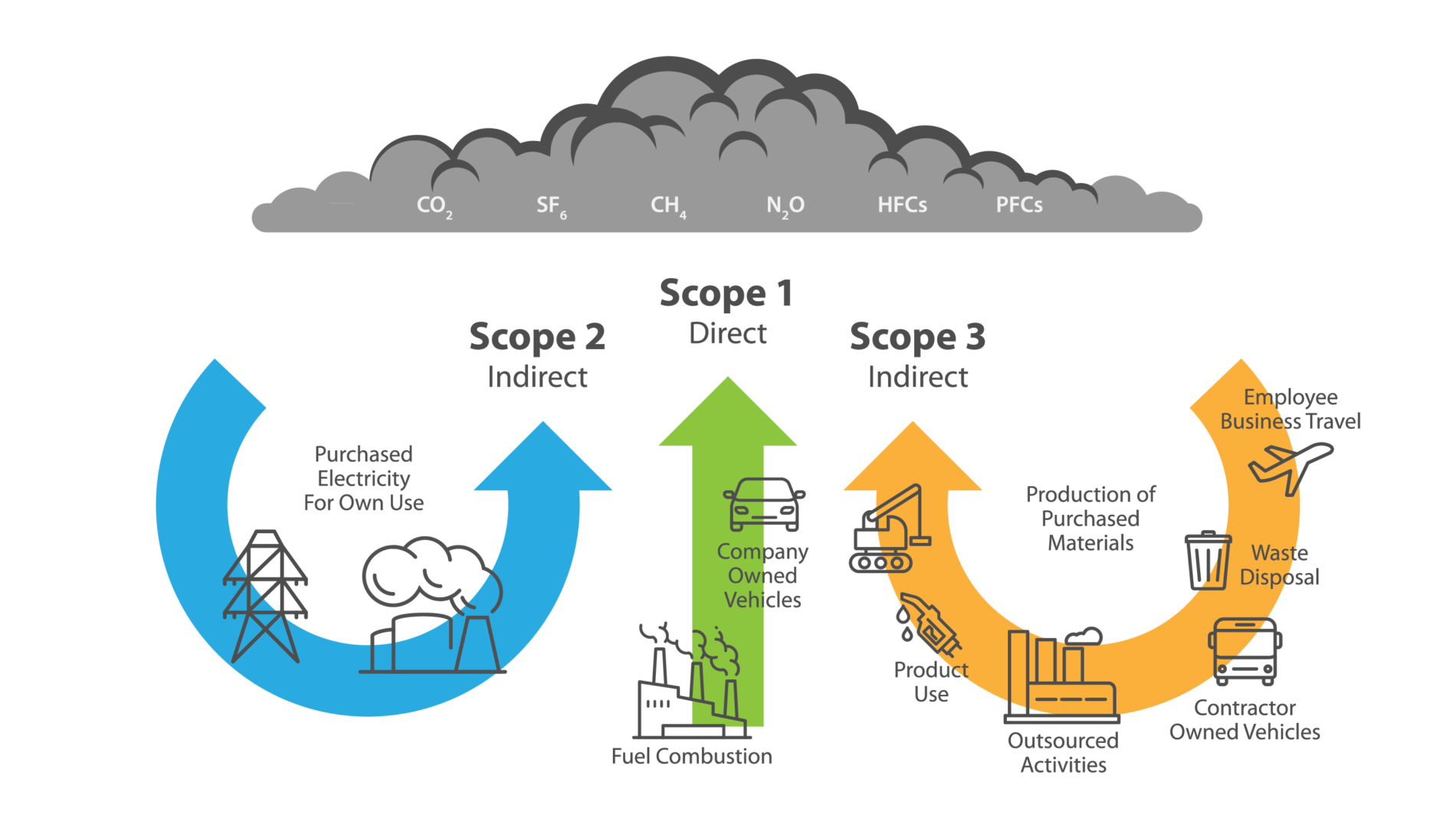
Infographic showing examples of scope 1, scope 2, and scope 3 emissions.
Supply chains contribute significantly to a company’s carbon footprint and, in many industries, can be four times the emissions from a companies’ own operations. Despite this, only one in three companies that reported their emissions to CDP in 2019 included supply chain (scope 3) emissions in their disclosure and one study of CDP reporting data found that only three in five companies reported engaging with their suppliers on environmental performance at all.1, 2 In light of this, many companies are largely operating with incomplete pictures of their emission hotspots. Organizations that don’t start now to seek out the data, the tools, and the understanding to grapple with their supply chain emissions expose themselves to an uncertain path through the climate challenge. The imperative for companies to act now to engage their supply chain partners, measure their emission hot spots, and leverage the value of a scope 3 inventory analysis has arrived.

Scope 3 emissions accounting, the means to a destination

Scope 3 emissions are often known as value chain emissions because it represents all indirect impacts upstream and downstream of an organization that is not already captured in scope 1 and 2 reporting. Companies measuring their scope 3 emissions face barriers not present or as extensive when measuring scope 1 and 2 emissions from their operations.

Commonly cited barriers include:

  • Limited primary data is often poor quality or non-existent
  • Specialized expertise is required to identify hot spots, set thresholds, and determine materiality;
  • Cross-disciplinary emission source data is dispersed across organizations (such as logistics and transportation, materials management, manufacturing, energy systems, and procurement);
  • Resistance from suppliers in providing data due to limited data availability in their own operations or concerns about confidentiality.

It’s important for sustainability teams that are just starting out to remember that, though these barriers are not insubstantial, tools and resources exist to make their journey to full GHG accounting a success. Companies should view the scope 3 inventory process as a flexible, iterative process driven by a company’s sustainability team. The most important aspect of pursuing scope 3 accounting is its ability to educate a company about its operations, supply chain, investors, employees, supplier partners, and its place in the global climate change solution puzzle.


“Companies may find most value in implementing the standard using a phased approach, with a focus on improving the quality of the GHG inventory over time.”

GHGP S3 Standard (sec 1.2)


The Benefits of Building a Better Data Ecosystem

The scope 3 accounting journey can benefit your company in a few ways:

1. Enrich a Culture of Collaboration & Enhance Employee Performance in the Process

In practice: Because supply chain emission source data is often spread throughout an organization it will be necessary to identify the data holder(s) and form a cohesive dataset.3 Your strongest allies in improving the quality of your inventory over time will be found through inter-departmental efforts within your organization by working with colleagues in areas such as finance, operations, human resources, and procurement.

Overhead view of sustainability team sitting at a table discussing a scope 3 emissions inventory.Furthermore, research shows that employees’ job satisfaction and sense of purpose are interconnected. The stronger an employee’s perception of impact on their clients, community, and coworkers, the greater the employee’s motivation to act in a way that benefits others. It’s literally a virtuous cycle that reaps dividends for business performance but it can often be difficult for companies to relay the story of its good works to its employees.

Rather than a barrier or a burden, your sustainability team should view this process as an opportunity to integrate and engage parts of their organization that may not have participated in your sustainability programs before. By engaging the collective intelligence of your organization, your sustainability team can provide more relevant insights into organizational impacts and opportunities.

Through collaborative supply chain emissions data gathering and assessment, your sustainability team is creating an opportunity to improve employee retention, motivation, and productivity. The process of discovery unleashed by this is ultimately an opportunity to elevate the experiences of employees – improving their opinion of your collective impact and their value within the organization. For example, an organization that measures emissions from employee commuting can use the data gathered to inform a competition-based employee program seeking to reduce emissions by biking or taking public transportation, instead of a single-occupant private car. Effective scope 3 data gathering and emissions management produce many opportunities for participatory engagement with employees.

Result: Scope 3 accounting is a broad reaching process of connecting intra-organizational barriers to unleash inter-departmental synergies and relationships. The expanded view of an inventory that includes supply chain emissions, when leveraged effectively, is the foundation of better environment, social and governance (ESG) storytelling that is ultimately better for business, employees and host communities.

2. Identifying the Data Gaps

Image of a broken chain, representing data gaps in a scope 3 emissions inventory.In practice: The scope 3 inventory process requires that you identify supply chain emissions hot spots as well as data blind spots. Identifying these blind spots will be increasingly important post-pandemic. A poll of supply chain managers conducted by MIT’s Center for Transportation & Logistics indicated that 67% of these managers foresee higher investment in supply chain sustainability post-pandemic.4 As demand for supply chain transparency grows to match investment, opaque supply chains that are vulnerable to disruption will increasingly come under pressure.

The scope 3 inventory process provides your organization with the tools needed to identify the links in your supply chain that are vulnerable to disruption. Conducted each year, it benchmarks the progress made by the organization, an important aspect for employees and investors, as well as continues to shed light on any new vulnerabilities that might arise.

Result: The scope 3 inventory assessment will reap dividends through improved relationships with suppliers, stakeholders, and employees.

The Time Is Now

Companies are increasingly coming under pressure for stakeholders to be more transparent and sustainable in their supply chain management. Evidence is mounting that COVID-19 is changing consumer behavior with one-quarter of consumers indicating they plan to patronize brands they can trust, and another quarter are willing to pay more for ethical brands during the recovery from the pandemic.5 These findings suggest that the actions companies take now, and in the future, will influence customer loyalty and growth as the pandemic reshapes consumer spending.

While the scope 3 inventory does not automatically lead to increased customer loyalty, it is an essential step an organization should take to improve internal trust and communication, provide stakeholders and consumers with supply chain transparency, and identify and resolve any supply chain opportunities or vulnerabilities faced by the organization.

Regardless of where you are at on your sustainability journey, its never too early or too late to consider including scope 3 measurement and benchmarking into your inventory program. In fact, now is perfect timing to get started for next year’s CDP or GRI reporting or to evaluate and set science-based targets. In our next related blog, we will further explore the challenges faced in developing a scope 3 inventory and pointers from the Apex Sustainability Team on overcoming those obstacles. For additional information about our sustainability services, please contact us at info@apexcos.com.

  1. A non-profit organization that operates a widely used global environmental disclosure system
  2. Dahlmann, Frederik, and Jens K. Roehrich, “Sustainable supply chain management and partner engagement to manage climate change information,” Journal of Business Strategy and the Environment, December 2019, Volume 28, Number 8, pp. 1632–1647
  3. For instance, the GHG Protocol’s Corporate Value Chain (Scope 3) Accounting and Reporting Standard breaks the areas a scope 3 emissions inventory can touch in 15 categories, 8 upstream and 7 downstream on the supply chain.
  4. MIT CTL’s Crossroads: Understanding Uncertain Futures virtual conference poll.
  5. Rogers, K. & Vakil, B. Coronavirus Is Proving We Need More Resilient Supply Chains. Harvard Business Review. 2020.

PFAS Proposed Regulation and What it Means For You

Apex hosted a webinar with SGS on Wednesday June 9th 2021, during which we shared some predictions regarding the future of PFAS.

Like clockwork, on the following day EPA announced three new actions to reduce the potential risks to the public from PFAS. The actions include issuing a proposed rule to gather data on more than 1,000 PFAS manufactured in the US, withdrawing a guidance that weakened the EPA’s July 2020 Significant New Use Rule (SNUR) restricting certain long-chain PFAS, and publishing a final rule to officially include three additional PFAS into the Toxics Release Inventory (TRI).
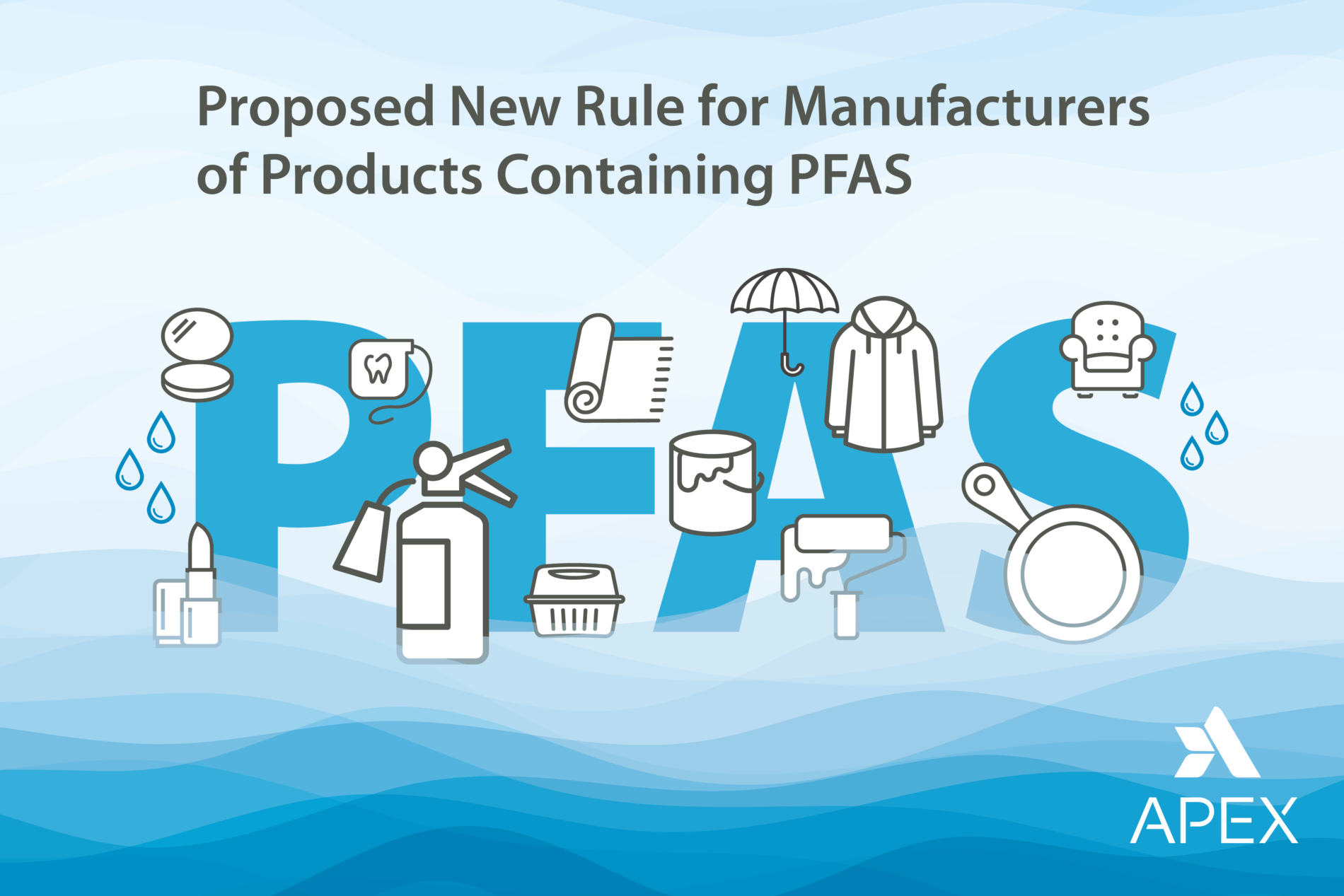
Graphic depicting products manufactured using PFAS

PFAS Manufacturing

The EPA’s proposed rule will collect data from manufacturers of PFAS. It would require all manufacturers and importers of PFAS since 2011 to report information to EPA, including the chemical identity, categories of use, volumes manufactured and processed, byproducts, environmental and health effects, worker exposure, and disposal. This rule would provide EPA with additional data to support future regulatory and research efforts. The proposed deadline for reporting the PFAS data to the EPA is one year following the effective date of the final rule. A public comment period is currently open for 60 days.

What does this mean for you?
If your company manufactures products containing PFAS, or did after 2011, the new rule will mean that you need to track down significant information—think bills of lading, waste manifests, industrial hygiene monitoring reports, and manufacturing records. Even if the final rule does not include an exhaustive list or if it does not require detailed or year by year information, this is likely to come at a cost to many manufacturers. Not to mention that if puts a target on a lot of backs for future investigation and remediation activities.

PFAS SNUR

In accordance with Biden’s Executive Orders and other directives, the EPA has withdrawn a compliance guide that weakened the July 2020 SNUR. This SNUR prohibits companies from importing certain long-chain PFAS as part of a surface coating on items without EPA review and approval. The compliance guide was issued in January 2021 in the last days of the Trump Administration and limited what could be considered a surface coating. EPA has indicated they believe that this guide was issued by political officials and was not deemed necessary by career staff. In addition, the guide was finalized without considering or addressing public comments. EPA’s July 2020 SNUR continues to be in effect.

What does this mean for you?
For most, not much. The compliance guide only provided flexibility on a limited list of products that could contain PFAS in their surface coatings, including automotive parts, carpet, furniture and electric components. If your company imports products that contain certain long-chain PFAS as a surface coating, then you likely need to review the SNUR in greater detail to determine if it applies to you.
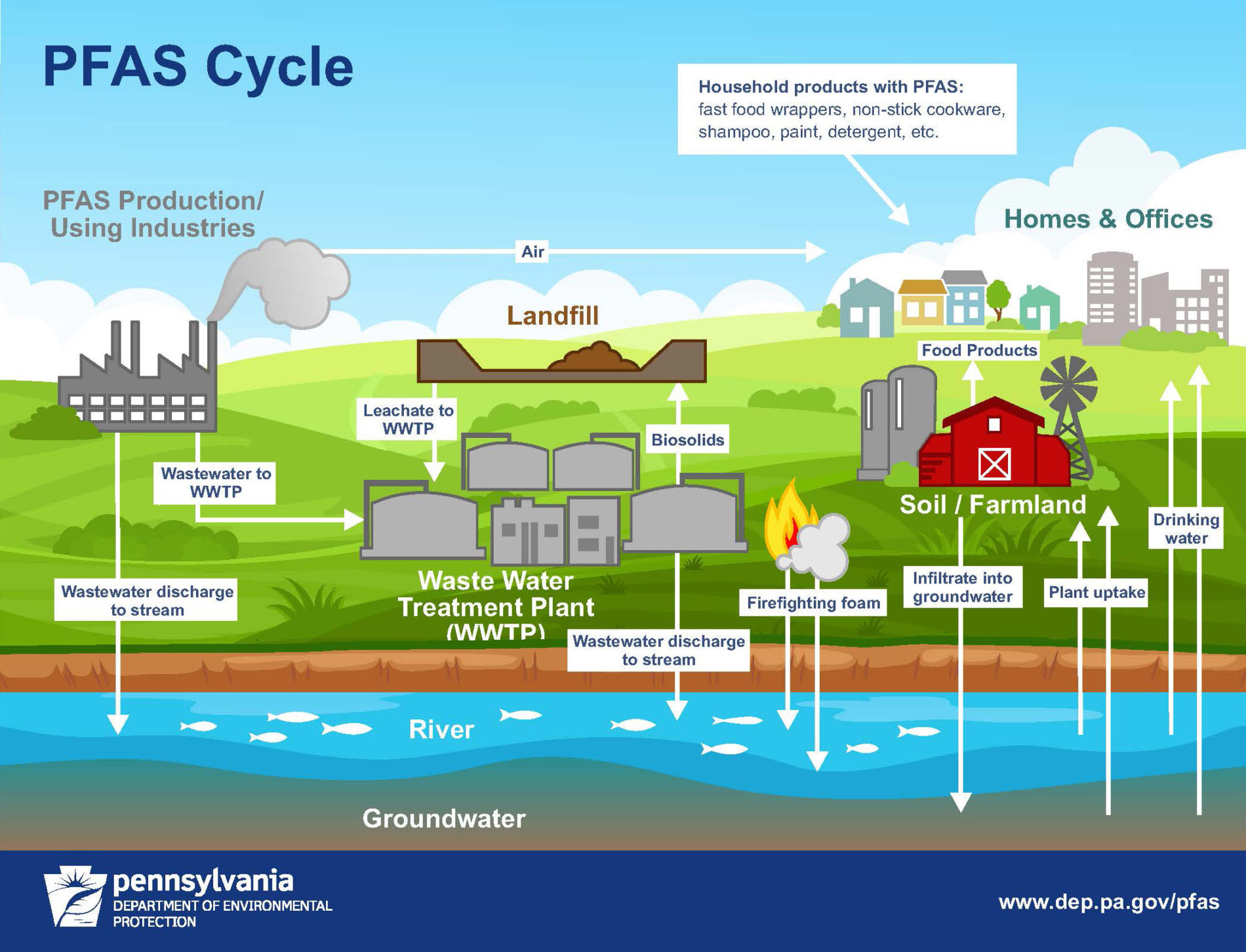
Graphic depicting where products with PFAS are manufactured, where they are used, and where they end up in the environment

PFAS Reporting to TRI

For TRI Reporting Year 2021 (due July 1, 2022), three additional PFAS have been added to the TRI list because they are now subject to a SNUR under the Toxic Substances Control Act (TSCA).

The three PFAS added to the list include:

  1. Perfluorooctyl iodide (CAS No. 507-63-1)
  2. Potassium perfluorooctanoate (CAS No. 2395-00-8)
  3. Silver(I) perfluorooctanoate (CAS No. 335-93-3).

What does this mean for you?
Prior to 2020, the TRI did not include any PFAS. In December 2019, EPA added 172 PFAS for the 2020 reporting year, and the three just added bring the list up to 175 PFAS for the 2021 reporting year. Since TRI reports are due annually on July 1st, if your industry is in a covered sector and exceeds certain workforce and chemical thresholds, you will need to include any of the 172 PFAS added in 2020 to this year’s annual report. These additional three PFAS won’t need to be included in your TRI report to EPA until 2022. To determine if your industry is covered you can review the list of NAICS codes in 40 CFR 372.23. A full list of all TRI Toxic Chemicals and the year they were added is also available on the EPA’s website.

To learn more about our referenced webinar please feel free to reach out to us directly, or download our slides.

PFAS in Our Backyards

On April 26th, OutThere Colorado, an online publication featuring news regarding some of the most scenic and interesting things happening in the 38th state, published an article indicating that PFAS—or per- and polyfluoroalkyl substances—had been found at elevated levels in none other than Frisco, where some of my family resides for much of the year. The information OutThere cited was reported by CBS4, a local news station, which looked at State Health Department testing results from the summer of 2020 that indicated PFAS was detected at a concentration of 58.5 ppt, or parts per trillion, in the town’s water supply. This concentration is under the EPA’s 70 ppt guidance value, but over thresholds set by several states including Massachusetts (20 ppt), Vermont (20 ppt) and New York (10 ppt). The Town of Frisco did not notify residents as the levels were below Federal thresholds, and there is no state regulatory guidance regarding these chemicals. Not yet, anyway.

It was interesting timing, given that we were discussing PFAS over the weekend, as I reflected on a work meeting I had on Friday with some colleagues in the waste disposal business. We had been discussing the treatment and disposal of PFAS, and the challenges associated with current technologies. My family wasn’t familiar with PFAS—I explained that they are chemicals manufactured to have amazing properties—heat-resistant, stain-repelling, tough and persistent—they also have some troubling health effects, including negative developmental, reproductive and immunity impacts.

Colorado’s Department of Public Health is currently looking at PFAS and has taken a number of steps to start to understand where PFAS impacts may be elevated within the state. Surveys have been conducted and findings compiled, and it is likely that more progress will be made regarding PFAS in the coming year. The Federal government is also making strides to regulate PFAS, much of this is covered on several of our earlier blogs; expect an update from us on our upcoming webinar in June (stay tuned for details). In addition, on April 27th, EPA’s Administrator Regan called for the creation of an “EPA Council on PFAS” which will look to develop a multi-year strategy to address PFAS concerns and establish new strategies and priorities. The EPA will look to work with local communities, State and Tribal agencies to develop collaborative approaches to PFAS.

As reports of PFAS in our towns and cities water supplies continue to rise, what do we tell our friends and families they can do to protect themselves? For one, activated carbon filters are a great first line of defense in removing many unwanted chemicals and flavors from our water. If you aren’t using an inline filter in your refrigerator or if yours has been blinking “replace” for a number of months, it’s probably a great time to order a new one. Other carbon-activated filters such as Brita or Zero water can also be used.

You can also write to your policymakers—your state and local representatives, about your concerns. Much information can be found on the EPA’s website or on your State’s Health Department or Environmental Regulatory Body’s website. Take time to read, educate yourself, and know that we are finding new ways to treat and remediate chemicals such as PFAS all the time.

Finally, take a deep breath. It is frightening to think that unseen chemicals could be impacting our health. But know that there are scientists and engineers, like those of us at Apex, along with policymakers in both our Federal and state agencies, doing all we can to solve these challenges. Because it’s not just our jobs. It’s our lives, and our families at stake.

Are You Prepared for the 2021 Wildfire Season? Understand Your Obligations as an Employer.

According to the recent March report released by the National Centers for Environmental Information, about 44% of the Continental United States was considered to be in drought conditions on March 30, 2021. The worst areas include Texas, California and portions of the Northeast. In addition, March snow cover was approximately 237,000 square miles lower than the 1981 to 2010 average and ranked as the smallest coverage in the previous 55 years.

All indications suggest that this year’s Wildfire Season will be intense.

In 2020, over 52,113 wildfires burned almost 9 million acres of forest, residential and improved land.

Washington State is considering implementing the same requirements as California. These requirements require that employers with workers who may be at risk of exposure implement controls and perform monitoring to ensure that the workplace is safe and that adequate protection measures have been put into place. The types of workplaces most affected are those in agriculture, construction, public works and others requiring outdoor work such as delivery drivers, distribution companies, and workers in loading dock areas.

On July 29th, 2019 California’s OSHA passed an emergency regulation to help prevent worker exposures to harmful levels of wildfire smoke.

How does the emergency regulation affect me?

This rule, documented in the California Code of Regulations, title 8, section 5141.1 applies to most workplaces when the Air Quality Index (AQI) is 151 or more and where an employer may reasonably anticipate harmful exposures to wildfire smoke. This regulation requires employers to take steps to reduce worker exposures, provide training and monitoring. Other states, such as Washington, may soon institute a similar regulation. Beyond regulatory drivers, smoke is a recognized hazard and employers have a duty to protect their workers. Apex is ready to assist and provide solutions to these challenging issues.

Graphic illustrating Air Quality Index levels, demonstrating a range of healthy and unhealthy levels

What exactly is the AQI?

The AQI is a nationally uniform color-coded index developed by EPA for reporting and forecasting daily air quality. The AQI reports the most common ambient air pollutants that are regulated under the Clean Air Act, including very small particles that cause respiratory problems, called particulate matter (PM2.5). The AQI informs the public about air quality in the area, tells who may be affected, and provides steps to take to reduce exposure when pollution levels are unhealthy (EPA, 2021).

What are my duties as an employer?

Protection from Wildfire Smoke, in California, applies to workplaces where the employer anticipates that employees will be exposed to wildfire smoke, or when the AQI for PM2.5 particulate is 151 or greater (“unhealthy”). Initially, employers must:

  • Check the current AQI before each work shift and periodically, or;
  • Measure current PM2.5 levels with a direct reading instrument;
  • Communicate the AQI results to employees; and
  • Provide Training on wildfire smoke health effects.

What actions are needed to comply when AQI >151?

  • Implement engineering or administrative controls to reduce employee exposure to PM2.5;
  • Alert employees when air quality is harmful, and what protective measures are available;
  • Provide NIOSH-approved respiratory protection, such as N95 respirators for voluntary use;
  • If the PM2.5 AQI is >500, the use of NIOSH approved respirators is required;
  • The use of surgical masks, bandanas, neck gaiters, scarfs, etc. is not allowed for respiratory protection; and
  • Provide training on proper use of respirators.

What solutions can Apex provide?

  • Deploy Direct Reading instruments to monitor PM2.5 and other Indoor Air Quality (IAQ) parameters, provide real time AQI rating 24/7;
  • Remotely monitor the AQI at your facility via WiFi connected Direct Reading Instruments—view data from your laptop 24/7;
  • Manage IAQ data for your facility to comply with the requirement to communicate to employees and customers alike, and make informed decisions;
  • Provide immediate Alerts when air quality approaches or exceeds AQI thresholds;
  • Provide training on the Regulations and health effects (issue Certificates of Training) to meet employer requirements under California Section 5141.1, and also to meet the OSHA Hazard Communication obligations;
  • Develop or review Employer procedures/plans for compliance and risk management;
  • Evaluate HVAC systems, filters, maintenance and controls as it relates to the wildfire smoke reduction; and
  • Deployment of portable HEPA air filtration devices (AFDs) to reduce PM2.5 and other IAQ particulate hazards when AQI exceeds thresholds.

EPA and PFBS Toxicity

On April 8, 2021, the US EPA released an updated toxicity assessment for perfluorobutane sulfonic acid (PFBS), which is a PFAS. The toxicity assessment was one of the key goals of the EPA’s PFAS Action Plan. It is expected that the EPA, states, local governments and tribal communities will use this toxicity assessment to determine whether to take action on PFBS to address human health risks in their communities. PFBS was used as a replacement chemical for PFOS, which was phased out of US manufacturing by 2002. PFBS has been identified in many products as well as in the environment across the US.

The toxicity assessment is part of the EPA’s human health risk assessment process, and is a summary of the potential health effects of PFBS. The assessment also identified the exposure levels at which those health effects may occur. EPA developed a chronic and subchronic oral reference dose for PFBS. These reference doses refer to the amount of a chemical a human can ingest daily over a lifetime (chronic) or less time (subchronic) that is unlikely to cause adverse health effects. The reference doses EPA developed are as follows:

Chemical Subchronic Reference Dose Chronic Reference Dose
PFBS 0.001 mg/kg-day 0.0003 mg/kg-day


This toxicity assessment suggests that PFBS is less toxic for humans than the more widely studied compounds PFOA and PFOS, which have chronic reference doses of 0.00002 mg/kg-day each.

At this time, EPA has reported that they are not issuing a regulation for PFBS, but are providing this toxicity assessment to the public to give state, local, and tribal agencies information to determine whether local action may be necessary.

Biden Administration: Environmental Policy Changes Ahead

The Biden administration is rolling out sweeping changes that will affect environmental policy and as such, business practices and operating costs. Overall, the new administration is expressing a scientific approach to environmental policy and will look to limit environmental exposures and impacts, hold polluters accountable, reduce greenhouse gas emissions, improve our Nation’s climate resiliency and seek to improve Environmental Justice for those living in historically poor and marginalized communities.

Climate Change

One of Biden’s first steps was rejoining the Paris agreement in February 2021. In alignment with this move, Biden and his team will seek to convert our existing energy resources to 100% clean energy by 2035, with a renewed focus on sustainable energy sources and potential challenges for traditional fossil fuels, evidenced by the revocation of the Keystone XL permit on January 20th, 2021. In addition to this, Biden has plans to restore the Working Group established in 2009 by the Obama Administration to develop a social cost of carbon, which would represent the cost to society, in a dollar value, for each ton of carbon emissions produced annually. These policies could also have a negative impact on coal, petroleum/gas, power plants and mining communities.

Environmental Justice

Otherwise referred to as EJ, Environmental Justice seeks the fair treatment and involvement of all people in the development and implementation of environmental policy regardless of demographics. Biden’s plan incorporates EJ across all governmental agencies and plans to prioritize at least 40% federal investments to disadvantaged communities. Federal grants, loans, permitting decisions, enforcement and remediation priorities will take EJ into account. Biden has asked his team for recommendations in the next 120 days on how to update EJ and incorporate it into policy. It is likely that Brownfields will also be reevaluated, along with their zoning, in EJ designated communities.

Superfund

The Trump administration did not make significant changes to Superfund other than streamlining remedies, and as such, there is no indication Biden is poised to revamp Superfund programs.

PFAS

There will be an enhanced focus on PFAS, its regulation and potential designation as a Hazardous Substance under CERCLA, which could mean reopening previously closed Superfund sites with potential PFAS impacts.

Enforcement

While the Trump administration largely left the regulation and enforcement of policy to the states, Biden is expected to drastically increase enforcement as well as reverse many policy rollbacks initiated by Trump. Additionally, Supplemental Environmental Projects (SEPs), which were pulled back by Trump, will be used as partly offsetting penalties for non-compliance with regulations, permit conditions, and consent orders. Biden will reestablish the use of SEPS and direct payments to 3rd parties (e.g. communities) in lieu of payment of fines to the Federal Government.

What we recommend you do now:

  • Climate Change: Do you have a sustainability plan? Does your company have environmental, social and governance (ESG) policies? Check out our ESG Checklist and our sustainability offerings, and let us know if we can help.
  • Environmental Justice: If you are a developer, real estate investor or a municipality, be on the lookout for changes that could impact economic policies and redevelopment programs, including Brownfields. Know your neighbors, get involved with communities around your facilities, build positive community relationships.
  • Superfund/PFAS/Enforcement:
    • Self-assess your business and its compliance history, perform internal audits or engage a third party to perform a gap assessment. Prepare accordingly, and close any compliance gaps before they become a potential issue. If you need help performing third party audits or a gap assessment feel free to contact us.
    • Review any closed remediation sites, and ongoing operations that could involve PFAS impacts. If you are unsure, check out our PFAS videoSOQ and reference the EPA’s PFAS resources.

With increased enforcement, environmental litigation against private industry is likely to be increasingly active in the next four years. Settlements will include more SEPs, third-party payments, and commitments to develop and implement proactive environmental management systems. Get yourself in a defensive position now so you are prepared!

National Groundwater Awareness Week: 10 Facts About Groundwater and Testing

From March 7-13, 2021 we celebrate National Groundwater Awareness Week to advocate for the protection and safety of groundwater. Water is one of the most precious natural resources. Read more to learn why!

#1 Approximately 164 million rely on groundwater for drinking water

In America, about half of the population (approximately 164 million) relies on groundwater for drinking water, from both private and public sources. This accounts for 26% of all fresh water used for all purposes in the US, the remainder being used for irrigation, industrial cooling, etc.

#2 Irrigation is the biggest user in the US

Groundwater helps feed the world; irrigation is the biggest user in the US, with about 53 billion gallons consumed daily.

#3 Nitrates, metals, volatile and semi-volatile organic compounds, and pesticides

The most common pollutants found in groundwater are nitrates, metals, volatile and semi-volatile organic compounds, and pesticides.

#4 Private well water should be tested a minimum of once per year

Private well water should be tested a minimum of once per year. Drinking water supplies obtained from shallow wells and surface water sources should be tested more frequently (i.e. seasonally), as they are more vulnerable to contamination. The USEPA does not regulate private drinking water wells, and testing requirements for those may vary by state and locality. According to the USGS, more than 43 million people rely on private wells as their source of drinking water!

#5 EPA Issued the Ground Water Rule (GWR) in 2006

EPA issued the Ground Water Rule (GWR) in 2006 to improve drinking water quality and provide protection from disease-causing microorganisms. It applies to public water systems that use groundwater as a source of drinking water.

#6 Ground Water Rule basic requirements

The basic requirements of the Ground Water Rule include:

  • Sanitary surveys
  • Source water monitoring
  • Compliance monitoring
  • Corrective actions

#7 Phase II Environmental Site Assessment

Groundwater and soil testing are often performed as part of a Phase II Environmental Site Assessment.

#8 Common sources of groundwater contamination

Common sources of groundwater contamination are leaking above and underground storage tanks, septic systems, uncontrolled hazardous waste disposal, landfills, chemical and road salts, and atmospheric contaminant deposition that enter surface water and stormwater runoff.

#9 In situ and ex situ groundwater remediation

If your groundwater is contaminated, there are two types of groundwater remediation:

  • In situ (in-place): contaminated water is treated underground within the groundwater zone without having to remove the groundwater for aboveground treatment.
  • Ex situ (off-site): contaminated water is removed from the ground and treated aboveground either on- or off-site.

#10 Treatment methodologies

Groundwater can be treated in numerous ways, including in situ methodologies with as injection technologies (e.g., chemical oxidation, air sparging) or ex-situ methods such as pump and treat that may incorporate air stripping, filtration/adsorption, and/or thermal systems. Complex treatment sites may employ a combination of these approaches.

Industry Alert: Top 3 Changes to 2020 Multi-Sector General Permit (MSGP) for Stormwater

The Multi-Sector General Permit (MSGP) is a National Pollutant Discharge Elimination System (NPDES) permit, which stems from the Clean Water Act (CWA). The 2015 MSGP for Stormwater Discharge with Industrial Activity expired on June 3rd, 2020 and the new 2020 MSGP does not go into effect until February 12, 2021. As a result of the landmark settlement between Waterkeeper Alliance and EPA (2d Cir. 15-02091) the new MSGP brings with it several major changes that permit holders must now follow.

Universal Benchmark Monitoring (Section 4)

The 2020 MSGP adds universal benchmark monitoring for all Sectors which include pH, Total Suspended Solids (TSS) and Chemical Oxygen Demand (COD). The runoff results will be compared to the EPA Benchmark levels which will then trigger stages, or “tiers” that are tied to corrective actions. The benchmark level for TSS is 100mg/L. As an example, if the annual average concentration of TSS exceeds this number, and/or if the pH levels in stormwater discharges from the facility are outside the specified range, a compliance trigger is activated, and the site must report these results and institute additional Best Management Practices (BMPs). This tiered approach is very similar to General Industrial Permits in Oregon, Washington, and California. This type of tracking will help the EPA more accurately evaluate the performance of BMPs. In summary, discharge sample collection and analysis results will trigger the need for additional source control and treatment control BMPs.

Requirement of Public Signage (Section 1.3.6)

The 2020 MSGP includes a requirement that MSGP operators must post a sign of permit coverage at a safe, publicly accessible location in close proximity to the facility. The sign must be readable from the public right-of-way, and also include information that informs the public on how to contact the EPA if stormwater discharges appear to contain pollutants. This type of compliance exposure potentially opens the door for public complaints and/or CWA lawsuits.

Non-Numeric Technology-Based Effluent Limits (Fact Sheet Part 2)

The 2020 MSGP contains effluent limits (wet weather discharge concentration limits) that correspond to Best Practicable Control Technology Currently Available (BPT), Best Available Technology Economically Achievable (BAT), and Best Conventional Pollutant Control Technology (BCT). The limits are expressed as specific pollution prevention requirements for minimizing the contaminant levels in the discharge. In addition, the 2020 MSGP revises the Sector-specific fact sheets to include information about control measures and stormwater pollution prevention by industry. Sector-specific stormwater control measures (SCMs) are found in Appendix Q, which the 2020 MSGP identifies as effective in controlling pollutants in stormwater. This means each facility Storm Water Pollution Prevention Plan (SWPPP) will be required to accurately identify all the pollutant-generating areas and confirm that each control measure (BMP) identified in the 2020 MSGP has been implemented. Each area and activity within the facility including: raw material storage areas, outdoor loading and unloading, heavy equipment storage areas, fabricating areas, and material handling areas, must be identified, and BMPs must be implemented for each area in accordance with the SCMs identified in the 2020 MSGP.

Pollutants

These changes are only a few of the proposed changes which potentially raise the facility compliance exposure. Once adopted, many sites subject to the 2020 MSGP will need to adjust their stormwater programs to maintain compliance. Expect some States’ General Industrial Permits to adopt similar compliance measures. This means: focus attention on pollutant source assessments, BMP implementation, and closely monitor runoff sample results.

Apex Is Your Partner in Stormwater Compliance

We can help you responsibly manage stormwater at all of your facilities, no matter where they are and how many you have. We’re doing that now in all 50 states, for small, local businesses as well as for the largest company in the world. Each year, we help over 2,000 private and public sector clients avoid regulatory penalties and capture capital investment savings. Contact us for more information.

EPA Progressing on Path to Regulate PFAS

The EPA published an interim guidance document that evaluates destruction and disposal technologies for PFAS and PFAS-containing materials, with a public comment period open through February 22nd. The guidance offers you options, not requirements.

We expect the Biden administration to do more; many groups are already urging the President to set new rules on PFAS, including a January 29, 2021 bipartisan letter from Congress signed by 132 members, seeking more aggressive legislation to designate PFAS as hazardous substances and prevent their future release into the environment. In addition, EPA’s February 22nd press release shows that the EPA is continuing to take steps towards regulating PFAS, including proposing collection of new data and issuing final regulatory determinations for PFOA and PFOS.

The current disposal guidance reviews and ranks technologies with anticipated environmental impacts. It’s a great way to review the options available for your specific situation.

Finally, the guidance document lists the types of industries that have been known to generate PFAS waste streams such as chemicals, adhesives, cleaning products, metal plating, plastic and resin production, paints and coatings, fire suppression materials, personal care products, various surfactants and other uses. Nothing new here, but it’s a useful reference for you.

At Apex we’re watching new guidance and regulations that affect our clients and our projects. This guidance won’t affect ongoing work, but it is a useful tool for people just starting on new PFAS projects.

Capabilities Inquiry