




Understanding Nature-Related Risks

There is a growing appreciation that our collective response to the unfolding climate and environmental crisis has been myopic. Partially, this is because our conversation has been generally limited to impacts to business operations, real estate (the built environment), and the overall economy. But what about the natural environment?
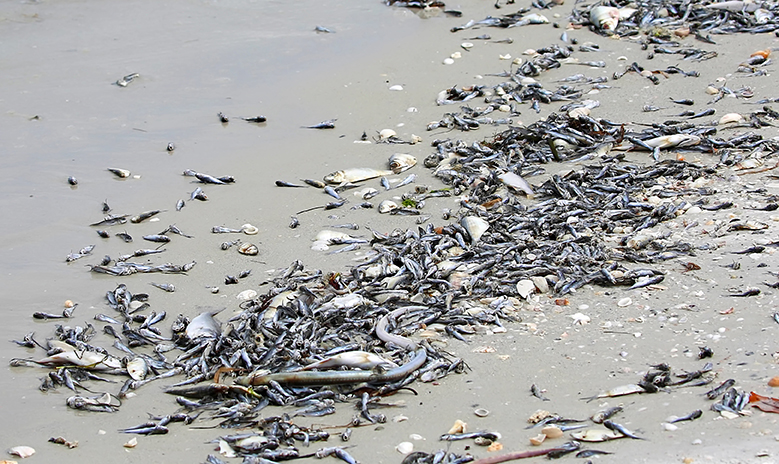
Hundreds of dead fish washed up on the shore, whose loss contributes to nature-related risks.The 2021 Report of the Independent Review on the Economics of Biodiversity led by Professor Sir Partha Dasgupta, commissioned by the United Kingdom (UK) Treasury, calls nature “an essential entity in our economic lives” and a “blind spot” for economics.1 Our society and economy are built on an ecological foundation, and that foundation is in danger. The report highlights that between 1992 and 2014, while produced capital per person doubled, and human capital per person increased by about 13 percent globally; the stock of natural capital per person reduced by nearly 40 percent. This means that our economic prosperity has come at the cost of nature.

This model is not sustainable. There is a growing gulf between the demand humans are putting on the natural systems and nature’s ability of keep up with that demand and replenish itself. The World Economic Forum (WEF) has estimated more than half of the world’s economic output (US $44 trillion) is moderately or highly dependent on nature. Of these construction, agriculture, and food and beverages are the three largest industries that depend most on nature.2

The COVID-19 pandemic made it clear that there is a direct link between ecological destruction, biodiversity loss, and ecosystem health. This impacts global economic activity. Now, you might say that the COVID-19 crisis gave nature a break. We all heard reports about the dolphins returning to the canals in Venice, and historically low air pollution levels in major cities. The Integrated Carbon Observation System (ICOS) reported a drastic drop in global CO2 levels, with a decrease of 17 percent by April 2020 in comparison to mean 2019 data.3 Unfortunately, most of these impacts were in cities, and according to data collected by the National Oceanic and Atmospheric Administration (NOAA), there has been little overall change in the global monthly mean CO2 levels in response to the pandemic, with records dating back to the 1980s showing a continuous annual increase in global CO2 concentrations, including in 2020 and 2021.4 Indeed, researchers have argued that “effects of the COVID-19 pandemic on biodiversity and ecosystem health can exacerbate drivers of zoonotic and infectious disease emergence, increasing the risk for future zoonotic pathogen spillover events and possible public health crises.”5

The Coalition of Finance Ministers for Climate Action notes though while climate change and nature loss are deeply interconnected and mutually reinforcing, nature loss could have severe economic and financial impacts because few human-made substitutes for ecosystem services exist, in comparison to the case of low-carbon alternatives to fossil fuels could.

But what is to be done?
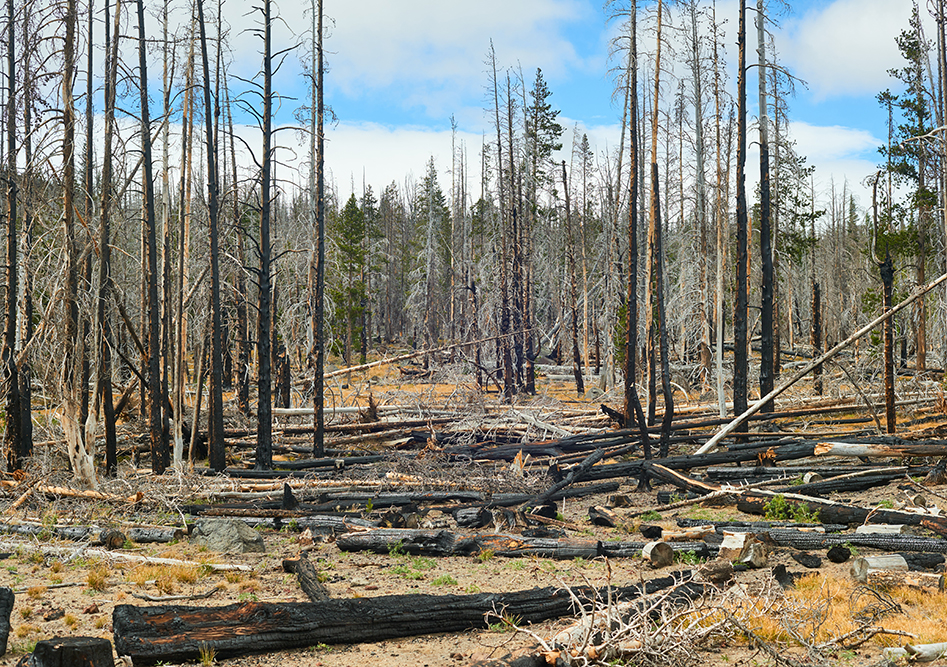
Burnt and dead trees in a forest after a wildfire, contributing to nature-related risks. Though climate change-related risks and nature-related risks are interdependent and share characteristics, the forms these risks take can differ. For instance, nature-related risks are generally more localized; while the negative externalities associated with climate change are more global. Nature-related risk can also have immediate local impact (though not necessarily) and are often more multidimensional and difficult to assess. Finally, risks associated with climate change are better understood and addressed than nature-related risks. Over the last decade, we’ve developed an architecture of climate change-focused disclosure, and businesses are increasingly more aware of risk and opportunities. Similar tools to assess nature-related risks aren’t readily available.

Thankfully, the first concrete steps to understand and quantify nature-related business risks are being taken, along with proposed operational changes to manage them. Just as the Task Force on Climate-related Financial Disclosures (TCFD) rallied the market into reporting on climate-related risks in a standardized way, the Task Force on Nature-related Financial Disclosures (TNFD) is working to put the architecture in place that “factors nature in financial and business decisions.” The disclosure, currently in its beta version, is meant to be a risk management and disclosure framework that is science-based and practical to implement.

The mission of TNFD is to ultimately support a shift in global financial flows away from nature-negative outcomes and towards nature‑positive outcomes. Apex Companies has formally joined TNFD as part of its forum, a consultive grouping of over 650 organizations, and is excited to support this mission and to help increase our net nature capital through this structured and systematic approach.

Apex has over 30 years of experience in sustainability, helping clients address and quantify climate impacts as well as expertise in natural resources consulting. We believe that only by understanding your risk exposure can you formulate nature-smart plans that embed nature-based solutions. We look forward to learning more about this new framework and to helping our clients develop solutions that integrate all aspects of climate and nature impacts from business operations.

To learn more about Apex and our related services, see our Sustainability and ESG Solutions, or contact us today!

1 https://www.gov.uk/government/publications/final-report-the-economics-of-biodiversity-the-dasgupta-review
2 https://www3.weforum.org/docs/WEF_New_Nature_Economy_Report_2020.pdf
3 Le Quéré, C., Jackson, R.B., Jones, M.W. et al. Temporary reduction in daily global CO2 emissions during the COVID-19 forced confinement. Nat. Clim. Chang. 10, 647–653 (2020). https://doi.org/10.1038/s41558-020-0797-x
4 https://gml.noaa.gov/ccgg/trends/global.html
5 https://www.thelancet.com/journals/lanplh/article/PIIS2542-5196(21)00258-8/fulltext
Introducing the Commercial, Industrial, and Institutional (CII) Permit

California’s Newest Stormwater Regulation

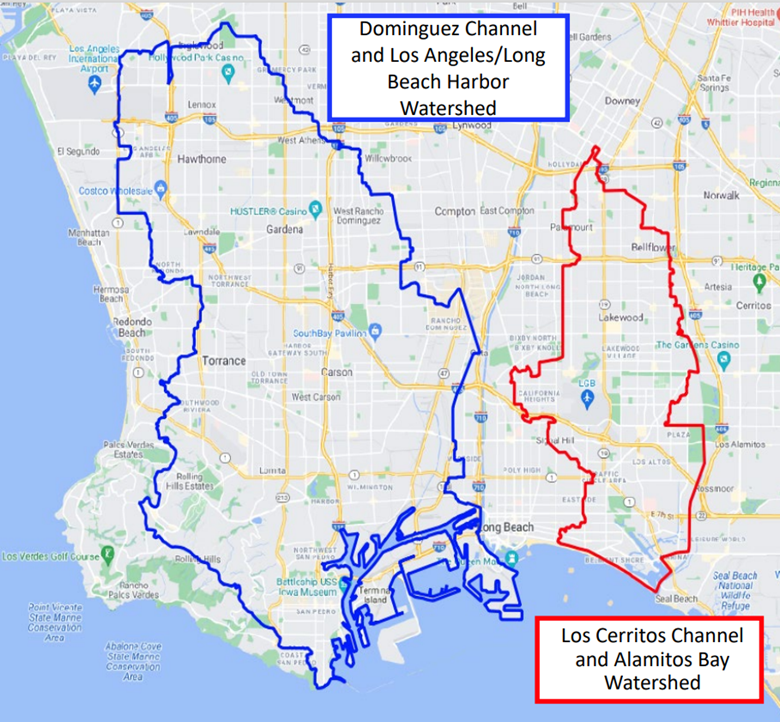
Map of the Dominguez Channel and Los Angeles/Long Beach Harbor Watershed and Los Cerritos Channel/Alamitos Bay Watershed

Dominguez Channel and Los Cerritos watersheds.

Source: EPA (US Environmental Protection Agency). 2022. Proposed Action to Address Stormwater Pollution in Two Los Angeles Watersheds

The Los Angeles Regional Water Board and US Environmental Protection Agency (EPA) are moving forward with a new regulatory framework for stormwater runoff from commercial, industrial, and institutional (CII) facilities in the region. The area that will be covered under this new framework includes the Dominguez Channel/Greater Los Angeles and Long Beach Harbor Watershed and the Los Cerritos Channel/Alamitos Bay Watershed.

A new National Pollutant Discharge Elimination System (NPDES) permit is currently in draft form with the intent to regulate discharges of stormwater from privately-owned CII sites like big box stores, malls, office buildings, and parking lots.

Public comments are due by October 24, 2022. This will require commercial properties to develop and implement a Stormwater Pollution Prevention Plan (SWPPP) and stormwater best management practices (BMPs) and collect stormwater samples.

Why is This Newest Regulation Being Introduced?

Traditionally, NPDES Permits are required for certain stormwater discharges. Municipalities are subject to the municipal separate storm sewer system (MS4) Permit, construction sites have a General Construction Permit, industrial facilities have the Industrial General Permit (IGP). But there are many other sources of pollutants from uses that are not currently individually regulated. The CII Permit will bring over 600 new dischargers into the NPDES Permit structure in California.

Case Law

The US District Court for the Central District of California, in Waterkeeper v. Pruitt, (No. 2:17-cv-03453) held that the EPA failed to regulate stormwater discharges from privately owned commercial and institutional properties in the Dominguez and Los Cerritos Channel watersheds. In response, EPA Region 9 engaged in the NPDES permitting process for stormwater discharges from the commercial and institutional sources within these two impaired watersheds. This resulted in a plan to impose similar regulations on schools, hospitals, and institutional and commercial properties in those two LA watersheds. In response to another 2018 district court order related to the potential for hazardous runoff into two Los Angeles watersheds, EPA Region 9 is developing more stringent, site-specific requirements for CII properties.

The EPA can use its residual designation authority under 40 CFR 122.26 to require NPDES permits for other stormwater discharges or category of discharges on a case-by-case basis when the discharges contribute to a violation of water quality standards, are a significant contributor of pollutants to federally protected surface waters, or controls are needed for the discharge based on waste load allocations that are part of total maximum daily loads (TMDLs) that address the pollutant(s) of concern.

CII Permit

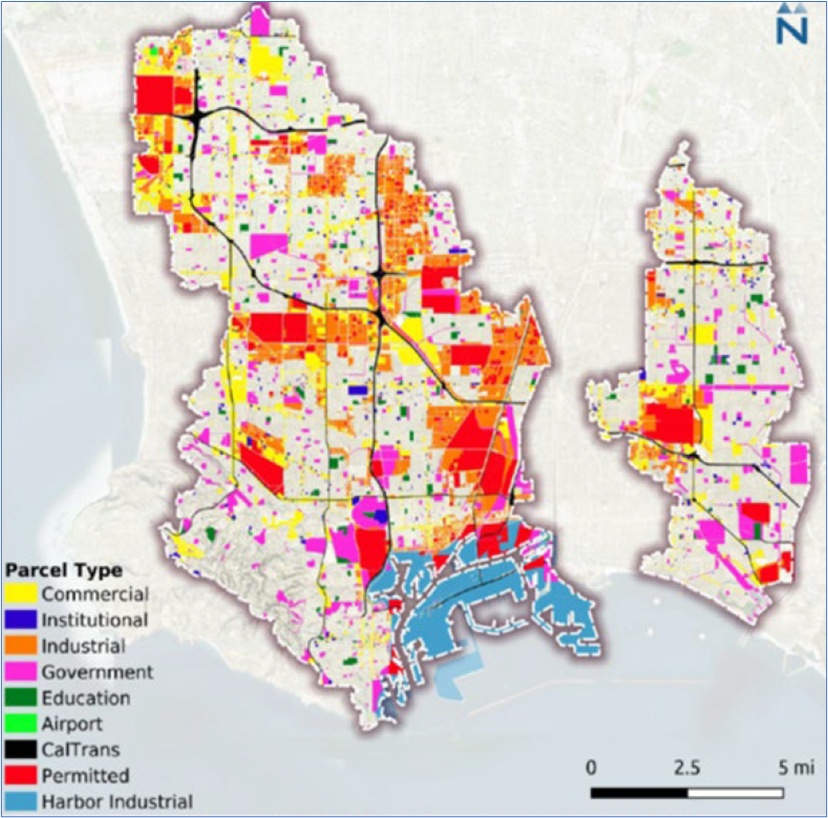
CII parcel types

CII parcel designation for the Dominguez Channel and Los Cerritos watersheds.

Source: EPA (US Environmental Protection Agency). 2021. Proposed Stormwater Residual Designation in Two Los Angeles Watersheds

After the public comment period, the Los Angeles Regional Water Quality Control Board (the Board) will likely adopt these requirements for these two watersheds by the end of 2023 with an effective date sometime in 2024. Any commercial, industrial, or institutional site with five-acres or more in impervious cover (including roofs) will be required to seek coverage under the CII Permit, including:

  • CII parcels with five or more acres of impervious cover
  • Unpermitted portions of IGP facilities with five or more acres of total area
  • CII land uses/examples: shopping centers, office complexes, car dealerships, warehouses, parking lots and private schools

There are several details which need to be clarified by the Board. In particular, the Board needs to define the discharger, the legally responsible person, and how to calculate common area acreage such as parking lots sidewalks and other amenities for the purpose of determining if the individual lessee is subject to regulation, or the property owner.

For existing IGP holders, permitted industrial dischargers, the CII Permit covers the non-industrial portions of the facilities (e.g., parking lots, rooftops) that are not covered by the IGP. This most likely means that industrial permit holders will no longer be able to exempt the roofs, employee parking areas, and other non-industrial portions of the facility.

Compliance Requirements (AKA What This May Mean for You)

While we wait for the Final Adopted CII Permit, compliance will require each CII Permit holder to complete the notice of intent (NOI), develop a SWPPP with site map, conduct a pollutant source assessment, install BMPs, conduct employee training, collect stormwater discharge samples, contract for laboratory analysis, prepare annual reports, and meet the very low numeric effluent limits (NELs) for copper, lead, and zinc, as well as bacteria, ammonia, and other contaminates.

There are three compliance options:

  1. Fund a Regional Project: Pay into an alternative compliance project sponsored by a public agency
  2. Design Standards to Reduce Runoff: Capture and infiltrate, use, or discharge to the sanitary sewer the 85th percentile storm event
  3. Demonstrate Compliance with Water Quality Based Effluent Limits: Comply with a set or requirements like the IGP fence line to fence line

How to Prepare Now

What should you do before the CII Permit becomes effective (estimated fall of 2024)? Given this timeframe, if the CII is applicable to you, you have about one year to prepare. Several recommendations for preparing for the CII are as follows:

  • Read the current Draft CII Permit and understand the requirements
  • Identify and define the area of your commercial land use
  • Collect stormwater discharge samples to assess current metals concentrations
  • Locate areas within the property where stormwater BMPs can be implemented
  • Conduct utility survey and engineering calculations for stormwater capture and treatment systems
  • Engage a consultant that specializes in NPDES Permit compliance in California

Hint, hint; Apex Companies can help with all of these things!

What the Future Holds

Currently, the CII Permit is slated for just the two watersheds in LA-Area. California Assembly Bill AB-2106, which would have required the State Water Board to establish a statewide commercial, industrial, and institutional NPDES order (CII Permit) was rejected by Governor Newsom on September 28, 2022. Newsom’s letter accompanying his rejection indicates that while he supports water quality programs and efforts to improve stormwater permitting and reporting, that changes to statewide stormwater management should be addressed in the statewide budget process and in alignment with California’s 2022 Water Supply Strategy.

While commercial, industrial, and institutional water users outside of the Dominguez Channel/Greater Los Angeles and Long Beach Harbor Watershed and the Los Cerritos Channel/Alamitos Bay Watersheds can breathe a small sigh of relief, it is likely that this is not the end of this regulation, nor does the rejection of this bill prevent other California watersheds from following suit.

For more information on Apex’s Stormwater Solutions, visit our website, or for help preparing for this coming regulation, please reach out to us today!

The Inflation Reduction Act Stimulates Corporate ESG Goals

On August 16, 2022, President Biden signed the Inflation Reduction Act (IRA) into law, a historical moment in climate policy. Although called the “Inflation Reduction Act,” many economists have noted that these new policies have a lot to do with greenhouse gas (GHG) emissions and climate policy, outlining aggressive goals to drive the United States’ anthropogenic GHG emissions down to 40 percent of 2005 levels by 2030.

Regardless of political affiliation, we can all acknowledge that climate has taken center stage on both the financial and global economic stage, and for good reason. Just months before the IRA was enacted, the Intergovernmental Panel on Climate Change (IPCC) published its latest report predicting that if the Earth’s global temperature were to rise by 1.5°C, there would be “unavoidable increases” in climate risk, which we can now directly equate with economic risk.1

These laws may be the largest action taken by the US Congress and government to combat climate change in history. When viewed along with previous progress towards decarbonization across the private and public sectors, it positions the US to reach the IPCC recommended 50 to 52 percent GHG emission reductions by 2030 (approximately 1 million metric tons of carbon dioxide equivalent). By providing policy certainty and funding for the clean energy industry, the IRA also bridges the technology gap with the US’ economic competitors, positioning us to reclaim the mantel of technology and climate leader.

Aerial view of wind turbines, one of the ways the IRA aims to expand the use renewable energy in the US.The IRA looks to mitigate the US’ influence on the 1.5°C scenario as noted above, and along with the Bipartisan Infrastructure Law, provides economic policy tools to provide cleaner energy, including major upgrades for public entities to reduce emissions, as well as boosting up low-income communities and improving access to resources. Specifically, the IRA’s funding primarily focuses on expanding renewable energy, decarbonized transportation, and green technology, encouraging an energy paradigm shift in the US, which will draw down GHG emissions and toxic air pollutants while positively influencing the economy and social equality. An estimated $369B is carved out for climate solutions and environmental justice (EJ) (see our earlier blog, The Rising Tide to Address Environmental Justice for more on this topic).
To fuel these initiatives, we can expect the following policies and funding allotments:

Individuals, families, and organizations

  • New and used electric vehicle tax credits ($7,500 and $4,000, respectively)
  • Energy efficient appliances and heat pump rebates ($14,000/household)
  • Solar tax credits (30%)
  • Wage requirements for clean energy tax credits

Organizations and industries

  • Hydrogen production cost savings (base credit of $0.60 per kilogram of clean hydrogen produced)
  • Forest and conservation efforts ($7.6B fund)
  • Methane emission monitoring ($1.5B funding to the EPA)
  • Methane emission penalties over 25,000MT of CO2e emissions ($900/ton in 2024, $1,200/ton in 2025, and $1,600/ton in 2026)
  • Carbon capture, utilization, and sequestration (CCUS) tax credits (various credits depending on carbon capture, use, and storage type)
  • Nuclear power plant tax credits ($15 per MWh produced)
  • Offshore wind production incentives ($100M fund)

What the IRA Can Do for You

The IRA must be viewed in the context of other government-driven steps to address climate risk. With the US Securities and Exchange Commission (SEC) poised to standardize public companies’ disclosure of climate risk information, 2022 will go down as a historical year for climate change policy reform.

As an organization, you might wonder how best to leverage the IRA and how to identify the most productive ways to contribute to the IPCC GHG reduction goal. Apex Companies highly recommends taking a long-term, data-driven, strategic management approach to ensure your climate action efforts are both impactful to your organization and to the wider goals of economic prosperity, social resiliency, and environmental stewardship.

Initial steps should include GHG inventory development, energy efficiency assessments, or a baseline review of your current ESG and sustainability program. Additionally, with new tools and models available, it’s becoming increasingly common to measure an organization’s climate change risk. A climate scenario analysis can help you assess this risk, providing greater resiliency to your operations and helping you prepare in the case of a natural disaster. An EJ screening can help to identify any business operations that could be impacting vulnerable communities.

Evaluating your risks and impacts allows you to identify your most critical objectives, which will position you to determine the most financially productive IRA and Bipartisan Infrastructure Law related projects to invest in. And remember that with any climate or social equity venture, thematic bonds can be another tool to enhance your investment as well (for more on green bonds, see our earlier blog Thematic Bonds: Opportunities and Risks).

The road to EJ and climate change mitigation can seem ambitious, but remember, every journey starts with a single step.

Below is a list of Apex service offerings to get you started:

To learn more, see our Sustainability and ESG services or contact us today!

1 https://www.ipcc.ch/sr15/

PFAS CERCLA Designation Wheels in Motion

On September 6, 2022, a proposed rule was published to designate perfluorooctanoic acid (PFOA) and perfluorooctanesulfonic acid (PFOS), including their salts and structural isomers, as Comprehensive Environmental Response, Compensation, and Liability Act (CERCLA) hazardous substances. Comments on the proposed rule in the Federal Register will be accepted for 60 days, ending on November 7, 2022.

If finalized, the designation would require that releases of these chemicals in excess of one pound over a 24-hour period be reported to the federal, state, tribal, and local authorities. Once the federal agency learns of a release or potential threat of a release, CERCLA authorizes response in one of three ways:

  1. By determining no action at the federal level is warranted
  2. By undertaking a removal action (if the situation presents a more immediate threat)
  3. By assessing the relative risk of the release in comparison to other releases via the National Priorities List (NPL), which is the first step towards a longer-term remedial action

This rule has also identified the various entities that may be affected by this action. These include:

  • PFOA and/or PFOS manufacturers (including importers)
  • PFOA and/or PFOS processors
  • Manufacturers of products containing PFOA and/or PFOS
  • Downstream product manufacturers and users of PFOA and/or PFOS products
  • Waste management and wastewater treatment facilities

As general guidance, the Environmental Protection Agency (EPA) also provides a list of North American Industrial Classification System (NAICS) codes that this rule may be applicable to, which are included below.

NAICS code List of potentially affected US industrial entities
488119 Aviation operations.
314110 Carpet manufacturers.
811192 Car washes.
325 Chemical manufacturing.
332813 Chrome electroplating, anodizing, and etching services.
325510 Coatings, paints, and varnish manufacturers.
325998 Firefighting foam manufacturers.
562212 Landfills.
339112 Medical Devices.
922160 Municipal fire departments and firefighting training centers, including federal agencies that use, trained with, and tested firefighting foams.
322121 and 322130 Paper mills.
325320 Pesticides and Insecticides.
324 Petroleum and coal product manufacturing.
324110 and 424710 Petroleum refineries and terminals.
352992 Photographic film manufacturers.
325612 Polish, wax, and cleaning product manufacturers.
325211 Polymer manufacturers.
323111 and 325910 Printing facilities where inks are used in photolithography.
313210, 313220, 313230, 313240, and 313320 Textile mills (textiles and upholstery).
562 Waste management and remediation services.
221320 Wastewater treatment plants.

In addition, when selling or transferring federally-owned real property, federal agencies would be required to meet all of the property transfer requirements in CERCLA section 120(h), including providing notice when any hazardous substance “was stored for one year or more”, or was “known to have been released, or disposed of” and providing a covenant warranting that “all remedial action necessary to protect human health and the environment with respect to any [hazardous substances] remaining on the property has been taken before the date of such transfer, and any additional remedial action found to be necessary after the date of such transfer shall be conducted by the United States.” There would also be an obligation for the Department of Transportation (DOT) to list and regulate PFOA and PFOS as hazardous materials under the Hazardous Materials Transportation Act (HMTA) (see CERCLA Section 306(a)).

Under the proposed rule, EPA and delegated agencies could also require potentially responsible parties to address PFOA or PFOS releases that pose an imminent and substantial endangerment to public health or welfare or the environment. Cleanup costs could be recovered from potentially responsible parties to facilitate remediation, rather than putting the burden on taxpayers or private property owners. The EPA is asking that this hazardous substance designation exclude consideration of costs and be based on known science and adverse health effects. However, the EPA is accepting comments regarding if costs should be considered, and how they should be considered, when designating PFOA and PFOS as hazardous substances.

Well documented adverse human health effects are associated with PFOA and PFOS exposure and impacts from the proposed rule are expected to result in direct public health benefits.

The regulated community has been slow to move on the remediation of PFAS without a designation as a hazardous substance, and for good reason; opening the proverbial “can of worms” can be a risky undertaking. With the publication of its Health Advisories for PFAS in drinking water back in July, preceded by several other PFAS and PFOS/PFOA-related regulations laid out on its Strategic Roadmap, EPA has demonstrated that they will progressively regulate these substances to protect human health and the environment. The proposed rule, if passed, is likely to have a sweeping impact to the due diligence process. Based on the initial estimate in PFAS Strategic Roadmap (see page 19) the EPA expects to publish the CERCLA designation rule as final in Summer of 2023, but, the proposed rule was projected for Spring 2022, so we may be more likely to see a final rule in Fall 2023.

To learn more about how Apex can help with your PFAS challenges, please visit our Remediation page and check out our Case Studies. For specific questions or to speak to an expert, contact us today!

The Rising Tide to Address Environmental Justice

According to global data collected by the World Metrological Organization (WMO)—over the past 50 years, the US alone has suffered a total of $1.4T in economic losses due to weather, climate, and water hazards, representing nearly a third in disaster related causes globally.1

This equates to more than 11K disasters attributed to weather, climate, and water-related hazards, accounting for just over 2M deaths and $3.64T in monetary losses globally in US dollars.

Unfortunately, natural disasters disproportionally impact those who live in lower income areas with fewer resources to mitigate these damages. This is where you may have heard the term “environmental justice” or EJ for short. The Environmental Protection Agency (EPA) defines environmental justice as “the fair treatment and meaningful involvement of all people regardless of race, color, national origin, or income, with respect to the development, implementation, and enforcement of environmental laws, regulations, and policies.” 2

They go on to state that “this goal will be achieved when everyone enjoys”:

  • The same degree of protection from environmental and health hazards, and
  • Equal access to the decision-making process to have a healthy environment in which to live, learn, and work.

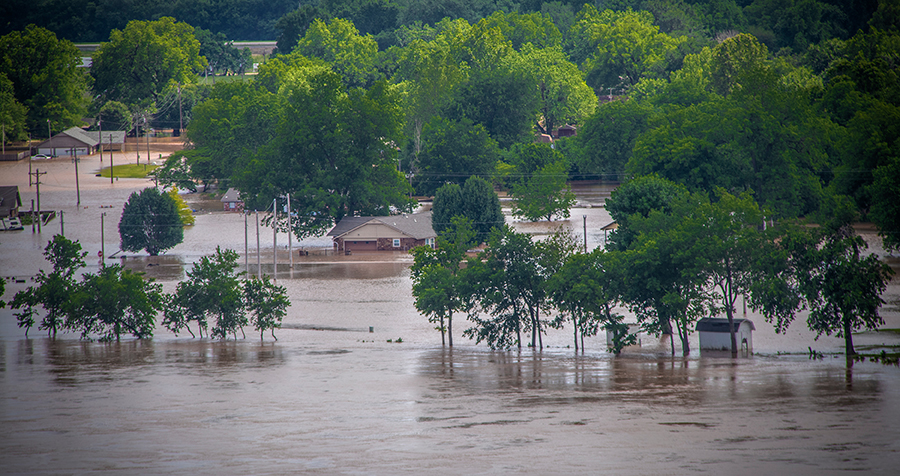
Flood waters surrounding buildings and trees, representing environmental justice and how natural disasters affect areas disproportionally This is a lofty goal; currently, people living in disproportionately impacted communities often lack access to expertise, education, and resources to participate in the decision-making process. This means people who are most likely to see their neighborhoods and livelihoods affected by natural disasters are the most ignored when it comes to planning and resource allocation. In the long term, this perpetuates a vicious cycle, whereby these communities take longer to recover after a disaster and are hit harder economically. How do we, as a society, address these issues holistically?

President Biden aims to address both climate and EJ issues through the Inflation Reduction Act (IRA), which he signed on August 16, 2022. In a statement that the White House made on Tuesday August 23, 2022, the US government estimates the cumulative climate-related benefits from the IRA will range between $0.7T and $1.9T through 2050. This is based on research conducted by the Office of Management and Budget (OMB), which considers statistics like those cited at the beginning of this memo.

How will these benefits affect those in marginalized communities? Several facets of this act most likely to have an impact on EJ include:

  • A funding provision for the Federal Highway Administration (FHWA) to improve infrastructure in disadvantaged communities
  • A provision to support the Council on Environmental Quality (CEQ) with additional funding to track pollution and climate change impacts to EJ designated communities and provide access to reporting to these communities
  • Funds granted to the EPA to reduce air pollution in schools located in low-income and EJ designated communities

Some activist reports indicate that close to $50B is set aside in the IRA for EJ related causes. A detailed analysis featured in the Harvard Environmental & Energy Law Program (EELP) dated August 12, 2022, provides additional information on each area specifically earmarked with EJ impacts. This includes direct as well as indirect EJ benefits. To learn more about the EJ component of the IRA we highly recommend diving into this table created by Harvard EELP, which breaks down each provision by category, IRA section, and the type of benefit provided.

Beyond the IRA you can also look for ways to mitigate climate risks both within your facilities and operational footprints. Many employers underestimate the impact that climate may have on their assets and their workforce. Small adjustments include investing in weatherproof building materials or conducting climate scenario analyses with EJ screens on operations to develop mitigation measures in the event of a natural disaster. You can also educate and participate by making wise climate choices and forming community partnerships to help advance environmental solutions in our own backyards.

We have compiled a list of resources on how your company can help further EJ below.

These are just a few examples of programs available to most communities, and many of these include elements that address environmental, social, and governance (ESG) and sustainability objectives.

We realize that there is a wealth of resources available online and hope that this summary has provided you with some ideas and inspiration for how you can be part of a positive change in your personal life, organization, or community. We would also encourage you to contact community-based organizations (CBOs) that work on the ground are great resources to understand in detail and in context of the particular needs of a community. Here is a great resource to find recognized leaders working on issues of EJ in the US.

To find out how Apex Companies can help you shape a sustainable and equitable future, see our Sustainability & ESG Solutions or contact us today!

1 https://climatedata-catalogue.wmo.int/explore; https://www.climate.gov/news-features/blogs/beyond-data/2021-us-billion-dollar-weather-and-climate-disasters-historical
2 https://www.epa.gov/environmentaljustice

Thematic Bonds: Opportunities and Risks

Even those who don’t believe in the concept itself can no longer deny the fact that climate change is disrupting how business is done. Companies are witnessing dramatic changes in the business environment, regulatory policy, access to finance, and stakeholder expectations, and as such, are making sweeping changes to address risk and capitalize on opportunities. To navigate the coming transformative decade, businesses will need to think creatively about how they can harness available resources.

A key element to mitigating sustainability risks and seizing opportunities in this disruption is unlocking access to capital. In the last decade, financing has been increasingly directed towards public and private markets who have made the transition to a sustainable business model. For example, according to a 2021 United Nation Environmental Programme (UNEP) report, two consequences are expected from this change in finance: “first, financing of new projects (debt and/or equity) will be more readily available for sustainable projects, and second, existing financial portfolios will be restructured to favor companies with environmentally sustainable business plans and performance.”1

Growth of Sustainable Debt Financing

Issuing debts, especially as bonds, to finance public infrastructure spending or private capital expenditures (CAPEX) is not new. However, in the last decade newer versions of age-old financing techniques have become increasingly popular. Of these newer financial instruments, using “thematic bonds” to address disruption caused by climate change has seen growth across sectors and geographies. Since the European Investment Bank and the World Bank issued the first “green bonds” in 2007, the total size of the thematic fixed-income market has grown to USD 1 trillion.2

Thematic bonds conceptual graphic showing currency and growth chartLike regular bonds, thematic bonds are issued by governments, multinational banks, and corporations. The issuing entity guarantees repayment over a certain period, plus either a fixed or variable rate of return. But unlike regular bonds, these fixed-income instruments are issued to raise finance for a diverse range of sustainability solutions. These thematic bonds require disclosure and reporting on the use of the issuer’s proceeds. These might be greenhouse gas emission reduction projects, energy efficiency real estate investment, building affordable housing, or financing clean energy infrastructure projects.

Broadly, there are five different thematic labels, each with their own requirements and nuances:

  • Green
  • Social
  • Sustainability
  • Transition
  • Sustainability-linked bonds

Sometimes all of these are grouped under the larger umbrella of “climate bonds”, or “sustainability bonds”, or even “green bonds”.

Since 2015, non-financial corporates have increased their share in the thematic bond market; according to the Climate Bond Initiative, in 2021, non-financial corporates were the largest issuer type based on cumulative volumes ($361B) beating out sovereigns (bonds issued by national governments), financial corporates, and government backed entities, among others.

Avoiding Greenwashing

Despite this astronomical growth in the sustainable debt market, “greenwashing” is a concern for both issuers and investors: How can investors be certain that issuers are not misrepresenting the positive impact of bond proceeds? And for the issuer, how can they meet the additional proceeds, management, and reporting requirements expected by thematic bond investors?

As the thematic debt market matures, rules and expectations are being put in place. For issuers, the market best practice is to issue thematic bonds that include a bonds’ framework, including the use of proceeds, process of project selection, management of proceeds, and reporting in accordance with the voluntary guidelines developed by The International Capital Market Association (ICMA). So far, ICMA has created the Green Bond Principles (GBP), Social Bond Principles (SBP), the Sustainability Bond Guidelines (SBG) and the Sustainability‑Linked Bond Principles—collectively called “The Principles”. These principles are important, because it is against these that a bond’s framework is externally reviewed using industry and assurance standards to minimize greenwashing.

How Apex Can Help

Second-party opinions (SPOs) are an assessment of the alignment of the issuer’s green, social, sustainability, or sustainability-linked bond framework or transition with the relevant “principles”.

Apex Companies relies on well-established industry standards, knowledge of market expectations, and our over 30 years’ experience as a leader in climate and sustainability assurance to provide SPO services for thematic bonds.

An SPO from Apex will include an assessment of the issuer’s overarching environmental/social objectives of the bond opinion on the elements of the framework and mapping the bond’s use of proceeds to the UN Sustainable Development Goals. An SPO from Apex demonstrates the bond’s alignment with market best practices, and our independent opinion ensures you meet investor expectations.

To learn more about Apex’s established suite of sustainable consulting and assurance services, see our Sustainability & ESG Solutions or contact us today!

1 United Nations Environment Programme (2021). Changing Finance to Catalyze Transformation: How financial institutions can accelerate the transition to an environmentally sustainable economy. UNEP, Nairobi.
2 10 Years of Green Bonds: Creating the Blueprint for Sustainability Across Capital Markets (worldbank.org), March 18, 2019.

Capabilities Inquiry